



BY MARYAM RAHAMAN
HUNTERS POINT — At the edge of Hunters Point Park South, most of the rocks are mossy green. Many of them are covered in layers of leafy rockweed, a kind of brown algae or seaweed that can be found throughout northeastern coastlines. Its name comes from the fact that it grows on hard surfaces, like rocks and shells.
Last Friday afternoon, the Hunters Point Parks Conservancy hosted a Rockweed workshop, dedicated to educating New Yorkers on the seaweed and giving them the opportunity to create their own rockweed art. It was one of eight events the Conservancy planned this April for Earth Month and held in collaboration with Biotech without Borders, a nonprofit organization dedicated to community-led biotechnology efforts.
“We were really looking at a balance of which communities we are serving and how we can connect with people to fulfill our tradition,” Jessica Sechrist, executive director of Hunters Point Parks, said, in regards to how the team designed programming for Earth Month.
Photos by Maryam Rahaman.
Lowell Iporac from Biotech without Borders led the workshop and provided background on rockweed. The algae provides shade and cooling for other organisms, meaning microhabitats can be found within rockweed. According to Iporac, one reason rockweed is so plentiful in New York is because its secretions make it not very appetizing for predators. Iporac does not recommend eating it because of the nutrients the rockweed absorbs. Also, Hunters Point Park is connected to the notoriously polluted waterway and Superfund site, Newtown Creek.
Because Sechrist and her colleague aren’t scientists, bringing in experts from groups like Biotech Without Borders is very important to her.
“That kind of like specialized knowledge, to be able to present it in a way that brings in an art focus and a hands on experience to make it feels much more accessible, while still giving very high quality information,” she added. “It’s just something that we’re really happy to be able to bring out.”
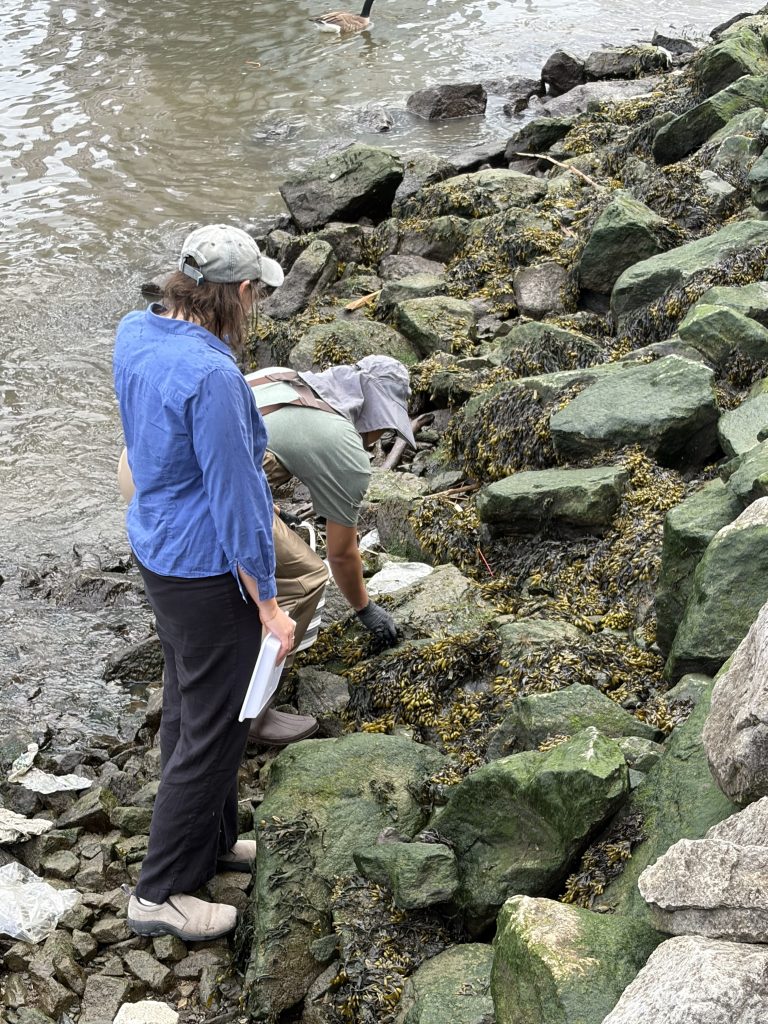
Between bursts of sunshowers on Friday, the workshop took a turn outside to go collect rockweed. Along the edge of the park, rockweed is married into every nook and cranny of the rocks right above the shoreline. A family of geese watched as Iporac ducked down to grab the seaweed from the slippery rocks.
After heading back inside with a bucket’s worth of rockweed, some pieces were placed under a microscope to view the microhabitats in full. At one point, the discovery of a tiny crab sent a wave of excitement through the room. As Iporac explained, three species of rockweed can be found in New York City: spiraled rockweed, bladder-wrack, and Y-shaped rockweed. The differences can be spotted based on the shapes. Y-shaped, the most common, was well-represented in the bucket.
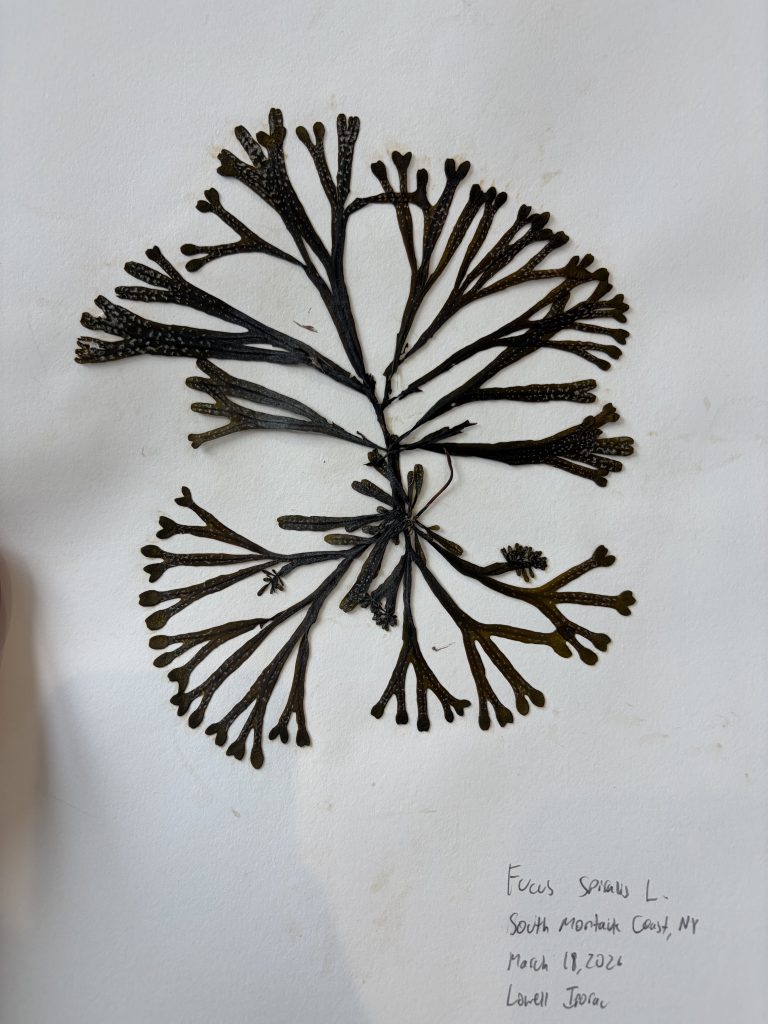
The workshop then transitioned into making rockweed herbariums with the collected algae. Iporac demonstrated how to make no-stress rockweed presses using layers of newspaper, wax paper, watercolor paper, and cardboard. As one younger attendee aptly put it, the process is quite similar to making a burger. In a week’s time, the press will reveal a print of the preserved piece of rockweed.
Each participant left with at least one press, with several participants layering multiple on top of one another. This Thursday, the Hunters Point Conservancy will continue its Earth Month programming with a marsh cleanup to remove plastic that’s gone into the wetlands. An art opening will take place in the park post-cleanup.
Post-Earth Month, volunteers are also needed at Gantry Plaza State Park on May 2nd for I Love My Park Day, a statewide initiative. Adults can join the LIC Waterfront 5k Run/Walk on June 6th, while kids can participate in the dash right after. To learn more about events or sign up, visit hunterspointsparks.org.