



LIC’s Energy Tech students made a strong showing at a high school climate innovation pitch contest modeled after “Shark Tank.”
BY JACK DELANEY
jdelaney@queensledger.com
CENTRAL PARK — Energy Tech High School, a STEM academy on the border of Astoria and Long Island City, prides itself on being ahead of the curve. Rows upon rows of solar panels blanket its roof, and several years ago the city provided the funds to build an in-house hydroponics lab.
But the school’s front yard, a narrow strip of low trees poking up from dusty dirt, is less high-tech. As a student put it, diplomatically, “the current aesthetic of the space leaves much to be desired.”
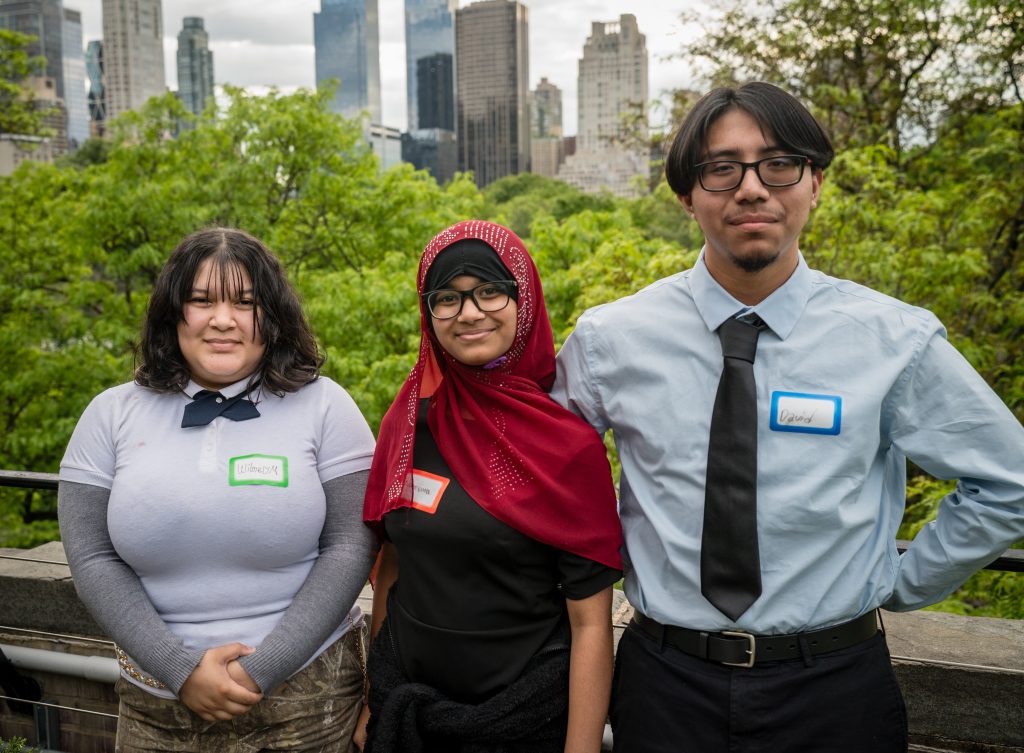
Not for long. Last Thursday, May 14, a team of Energy Tech students — Wilmely Martinez, David Morales, and Nayeema Haque — won first place in the City Parks Foundation’s (CPF) inaugural “Dolphin Tank,” a citywide climate innovation pitch contest, with a proposal to transform the underused space.
The winning pitch, “Persephone’s Garden,” outlined plans to convert the neglected front yard into a green plot that will support native and at-risk pollinators, while mitigating heat and offering classmates hands-on experience with gardening — all for just under $5000.
“It was super nerve-wracking, especially since we went last, but we’ve been working for weeks,” said Haque. “Everyone there was really nice! I feel better now.”
“Dolphin Tank” is an offshoot of CityParks Eco-Innovators, a free afterschool program for 9th through 12th graders launched last year by CPF. Students from the four participating schools receive training in environmental advocacy, including a popular field trip to Frost Valley, and juniors and seniors can apply for paid summer internships.
Founded in 1989 by Bronx-born novelist Avery Corman, CPF oversees a range of programming in 330 parks across the city, such as the outdoor concert series SummerStage. But while the nonprofit primarily relies on private philanthropy, Eco-Innovators is a unicorn: the initiative is funded by a federal grant from the EPA’s regional branch, an increasingly rare occurrence.
Eco-Innovators is still in its infancy, and CPF is excited to experiment with more flourishes like the Dolphin Tank contest, which doubles as a forum for students to share their final projects with one another. “Climate change is climate change,” said Heather Lubov, the nonprofit’s executive director. “But teaching kids to be advocates is a little bit different for us.”
From left: Nayeema Haque, Wilmely Martinez and David Morales won top honors at the May 14 event. Photo courtesy of CPF.
It was a balmy day, and the four teams of high schoolers filed into a long and narrow room in The Arsenal, a historic building by the Central Park Zoo, to listen to the opening speeches.
First up was a group from Bronx Legacy High School, who had come to pitch two seed banks from which staff and students would be able to gather materials to grow their own vegetables. With a proposed budget of $757.94, the project carried the slimmest price tag of the field, and the team explained that it would fill a local gap in access to affordable, fresh food.
The five judges — who ranged from ESG investors to nonprofit grant managers — were complimentary, but didn’t refrain from tough questions. What if there was a run on the bank, for example? (The reply: stakeholders would be encouraged to donate or trade seeds if supplies ran low.)
Next to the stage was the whimsically-named Giggling Platypus Co, from the Brooklyn Academy of Science and the Environment (BASE) in Prospect Heights. This new unit outlined their plans to redesign the school’s backyard, a paved space where previous Earth Day events had been hampered by extreme heat.
Instead, the team hoped to outfit the area with benches, planters, and even a greenhouse. Judge Dereck Skeete, a CUNY professor who serves on CPF’s board, was skeptical about the last component — had any of the students built something similar before? — but they received plaudits for their thorough presentation, which accounted for the possibility of flooding.
The third group, Bloom for Tomorrow LLC, was also from BASE and shared a similar pitch geared towards a different underused plot on the school’s campus. Teammate Joshua Reece passed around his drawings, which envisioned installing six planters to the tune of roughly $4000.
“If this project works in our favor, we will put our hearts and soul into it not only for our school, not only for us, but for our environment and the community that lives in it,” the presenters promised.
That left the emissaries from Energy Tech, whom the judges would later applaud for incorporating data — such as studies suggesting that gardens reduce anxiety and depression — into their pitch.
After the presentations wrapped, the crowd meandered upstairs to the roof for vegan sushi while the judges huddled in a loose circle, deliberating.
Bash Johnson, one of the BASE students, shared that AP tests had made it difficult to put as much time into his project as he would have liked, though he praised the Eco-Innovators program — especially the upstate field trip. Seated a few steps away, Wilmely Martinez from Energy Tech offered her motivation for signing up: “I grew up around a mom that had a ton of plants,” she said. “I’ve grown attached to them.”
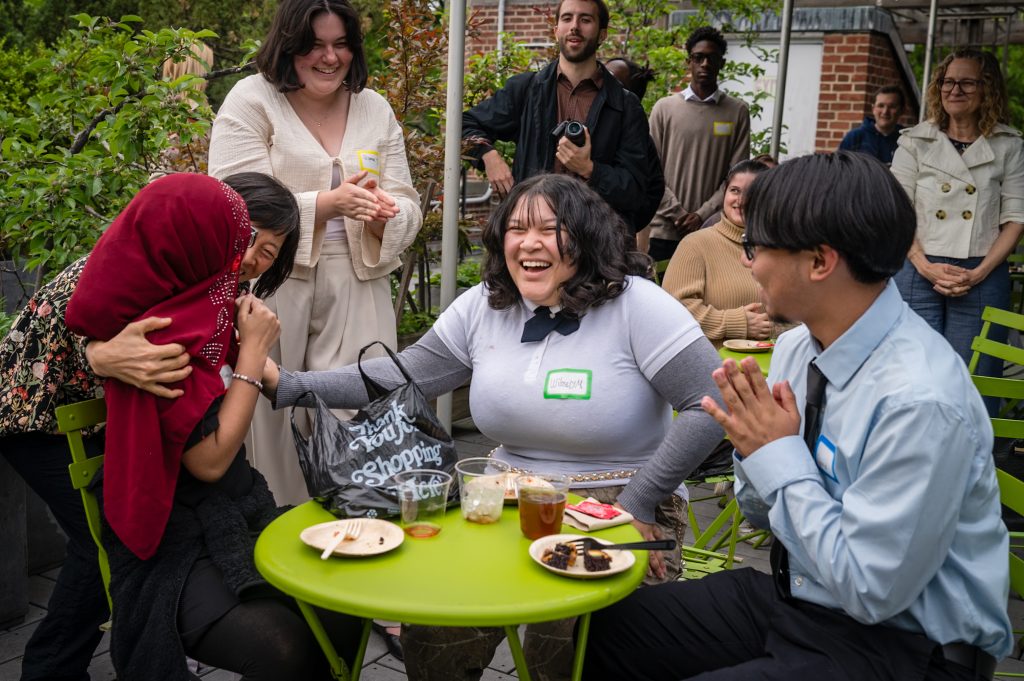
When the results were announced, the Energy Tech camp beamed as they basked in their victory. But even the runners-up were in good spirits.
“To be honest, this whole experience was amazing,” said Joshua Fletcher, of BASE’s Giggling Platypuses. “It broadened my palate to the amount of people who care for the environment, and the amount of people in general who just want the best for this world. It was great to talk in front of the crowd, to show my confidence and the work I’ve put together.”