


Search
There are no ads matching your search criteria.

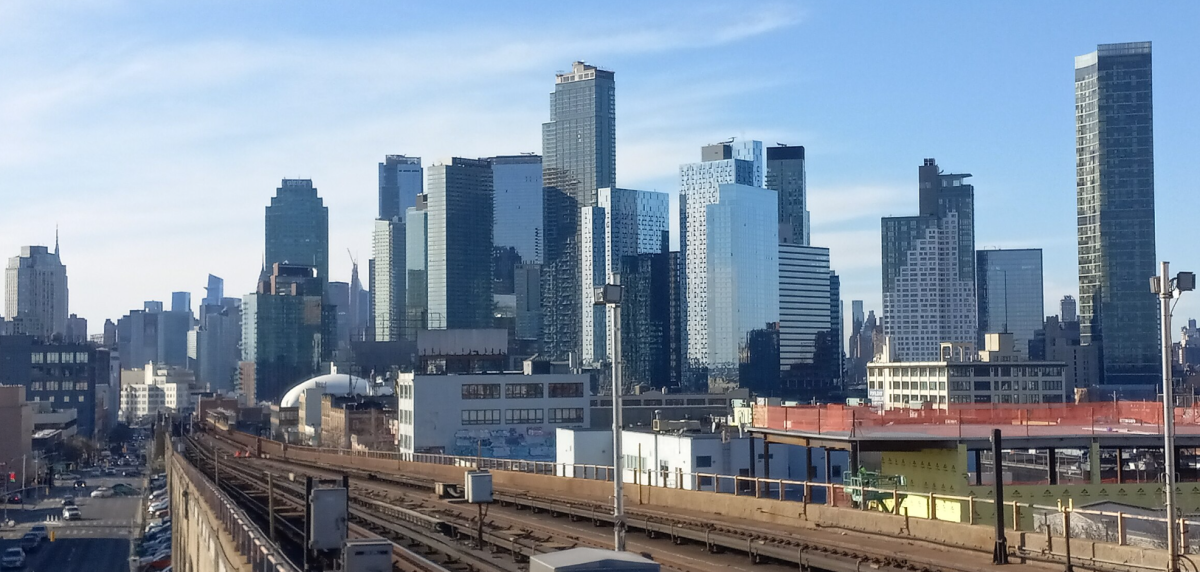
Long Island City’s Forgotten Great Builder

Photo via Wikimedia.

GEOFFREY COBB

Author, “Greenpoint Brooklyn’s Forgotten Past”

gcobb91839@Aol.com

A famous quote is written on the memorial to the great London architect Sir Christopher Wren, “If you seek his monument, look around you,” and the quote also applies to Michael Degnon in Long Island City. Though a forgotten figure today, Degnon built many of the industrial buildings that still characterize the area.

His legacy goes far beyond Long Island City. Degnon’s construction projects helped shape New York City. Degnon was born of Irish parents on a farm in Geneva, Ohio, in 1857. His father died when he was just a child leaving his widowed mother to run the farm. Farm work helped Degnon develop into a powerful man who stood six-foot-four with broad shoulders. He came of age as America needed massive construction projects to link the nation by rails and became a contractor, successfully completing several big jobs in different States. By age twenty-five Degnon had become a millionaire.

Degnon formed a construction company in 1896 and arrived in New York City the following year. The city needed massive infrastructure projects and Degnon proved to be an engineering problem solver. In 1897, bridge builder Buck Lefferts hired Degnon’s firm to build the pneumatic caissons under the East River and towers and anchorages on the Brooklyn side of the Williamsburg Bridge.

A New York Times article on November 6, 1904, heaped praise on Degnon, saluting not only his engineering prowess, but also his amazing personality, noting Degnon’s equanimity in solving complex logistical and engineering problems and noted that his staff was devoted to him. The reporter also claimed Degenon’s capacity for work was unlimited, but that it was” no greater than his good temper, his tact, and his genial manners.” He also possessed an uncanny ability to
calculate the cost of massive building projects almost precisely.

No sub-contractor built more of the Manhattan subway system than Degnon. His firm won contracts, totaling millions of
dollars in 1904, the equivalent of billions today. His firm built the tunnels and lines that connected Manhattan and the Bronx as well as much of today’s #1 train. Degnon’s most difficult Subway tasks were the excavations under Park Row, where he had to ensure that four above ground trolley tracks could continue to run, even as the earth was scooped and the tunnel built beneath them. Building the City Hall loop also  necessitated burrowing under the foundations of the old Times Building and bisecting several Post Office vaults. His firm also managed to dig through the quicksand where a
lake once existed around Canal Street. He skillfully managed to tunnel under 42nd Street, despite heavy traffic over excavations, boring through solid rock while not disturbing pipelines, elevated railroad supports, and sewers. He built what today are the New Jersey Path train lines into Manhattan and many of the tunnels serving Pennsylvania Station.

His greatest legacies are in Queens. His firm constructed the Steinway Tunnel under the East River from Sixtieth Street, Manhattan, to Long Island City and the elevated extension to the Bridge Plaza in Queens that allowed the #7 train line to be built. He also bought up wetlands between Corona and Flushing and filled in the swampy ground with ash, which eventually allowed the creation of Flushing Meadows Park, the largest park in the borough of Queens. A visionary, Degnon transformed Long Island City into a giant manufacturing hub where Corporations could set up factories and transport their goods to by railroad. His firm bought 362 building lots on six acres of swampy ground in and around Jackson Avenue where he would construct the massive Degnon Terminal, which allowed companies to either purchase or lease the land from the Degnon Realty & Terminal Improvement Company and build a factory.

He shrewdly completed the terminal’s first industrial structure in 1909, the same year the Queensboro Bridge opened and transformed the borough. The building became the now iconic Loose-Wiles Sunshine Biscuit Company, known as the “Thousand Window Bakery”, which allowed the floors to be flooded with sunlight. The building became the largest factory of its kind in the United States. The biscuit company manufactured their trademark Sunshine Biscuits here, as well as Krispy Saltines, Hydrox Cookies (which would become Oreos) and the world-famous Animal Crackers. The plant closed in 1965 and stands today as LaGuardia Community College. The terminal was located near the massive Sunnyside rail yard of the Long Island Railroad. In 1913 the terminal became linked by rail to the yard through Degnon’s construction of a private rail system known as the “Montauk Cut-Off.” The huge factory complex and its perfect transportation infrastructure enticed some of the largest American manufacturers to set up shop in Long Island City, soon transforming the area into one of the largest industrial areas in the United States. Some of the Terminal’s early clients included the Packard Automobile Company, American Ever Ready Battery Company, and American Chicle Company. Degnon decided to build an elegant mansion.

In 1910 he purchased sixteen acres in Jamaica Estates, the future childhood home of President Donald Trump. He built the estate’s sewer and utilities systems before building a grand residence that he donated to the Passionist fathers shortly before his death in 1925. Few men in the history of New York City left a greater architectural legacy than he did.
 

99-Year-Old Cab Driver Honored In Family Screenplay

From Yellow Cab To Silver Screen: Jack Dym’s Story

By MOHAMED FARGHALY

mfarghaly@queensledger.com

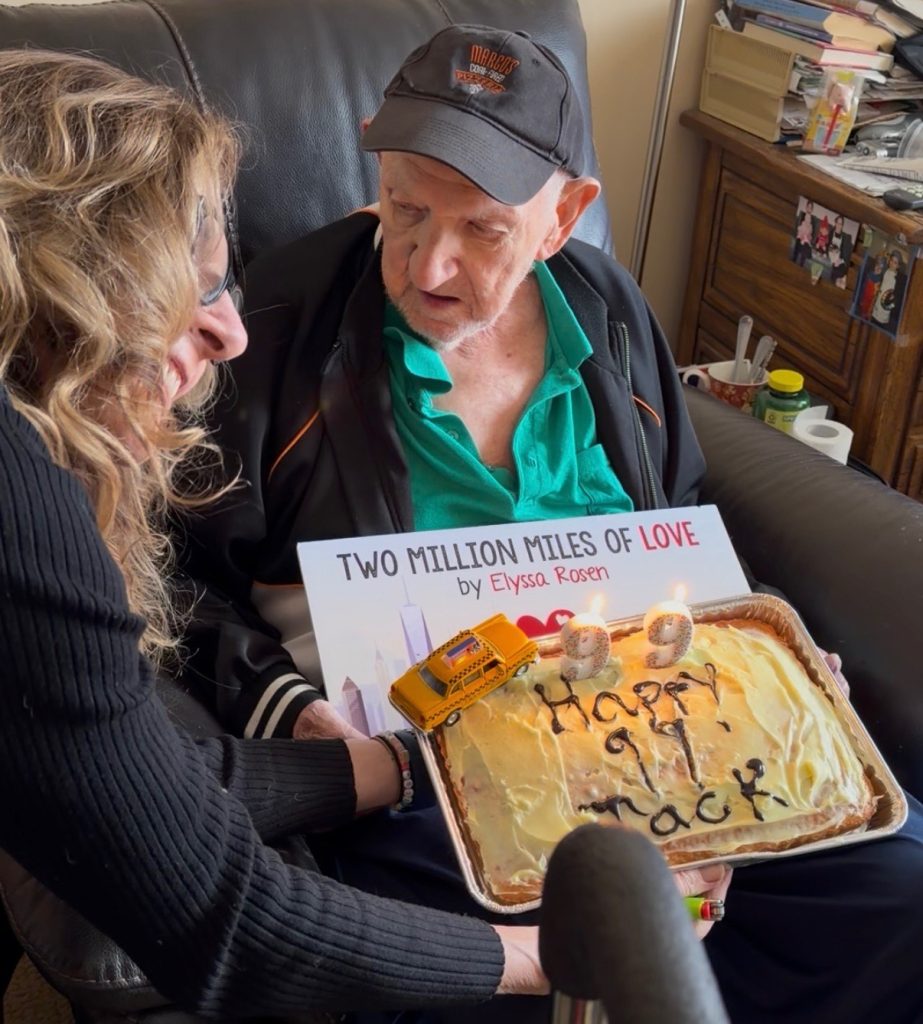
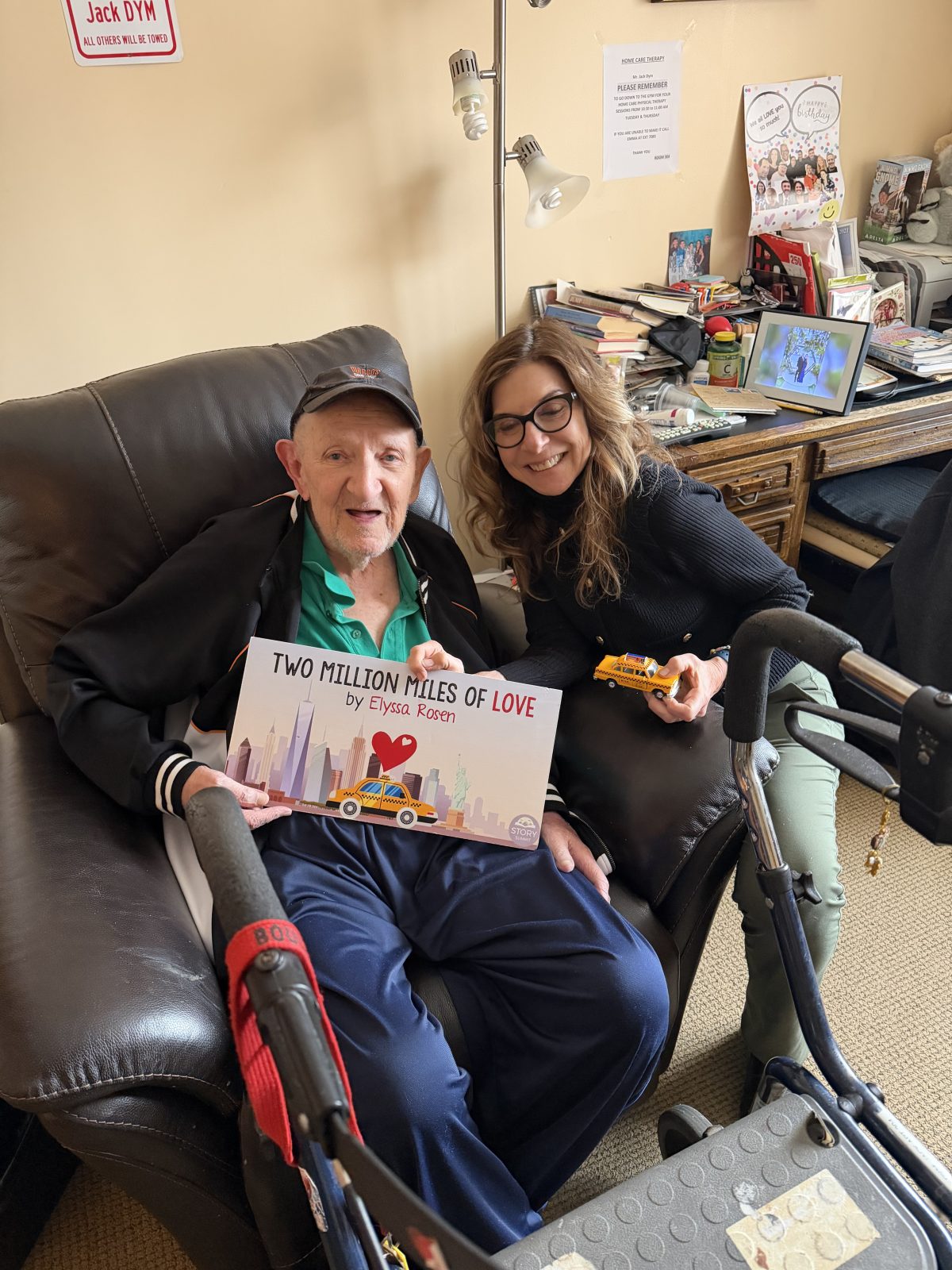
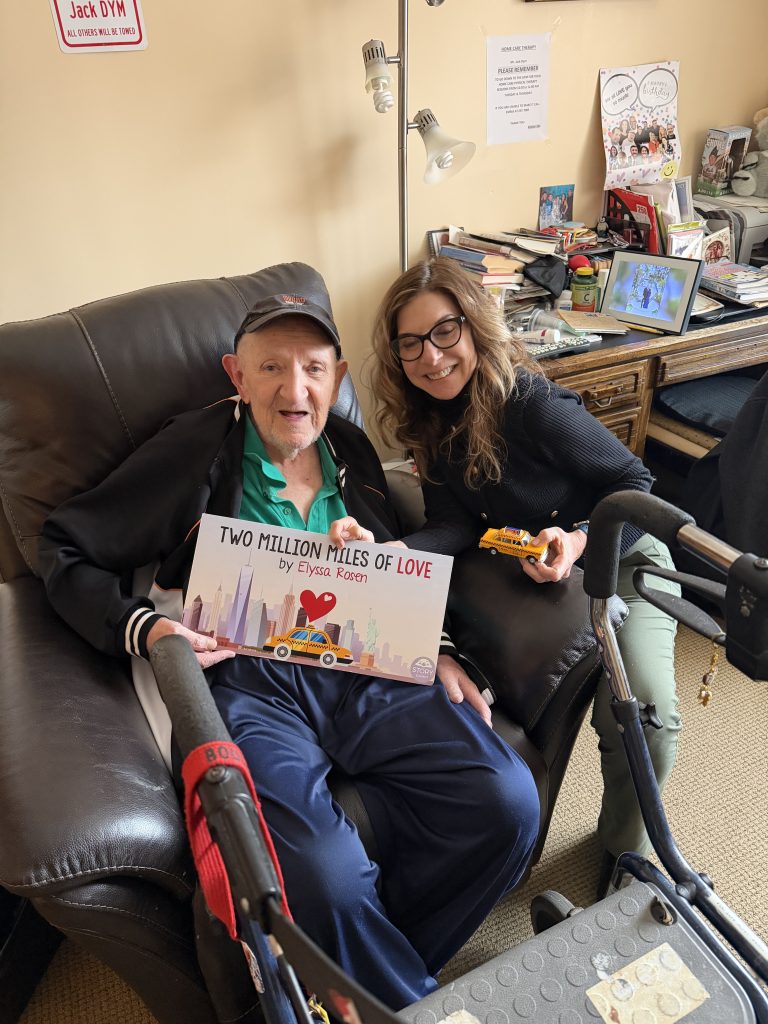
Jack Dym, a New York City cab driver whose career spanned more than six decades and over two million miles, celebrated his 99th birthday this week with a small, intimate gathering of family. Though quiet, the occasion marked a lifetime of dedication to the city he has loved and served, and a legacy that continues to inspire both family and filmmakers.

Dym, a widower and father of four, became a symbol of perseverance and dedication in New York’s taxi community. In the 1980s, he received a lifetime achievement award for his remarkable career, which saw him crisscross the boroughs thousands of times over. In 2002, he was featured on CBS Sunday Morning after completing his high school education and attending his senior prom in his 80s, an event that captured the hearts of viewers nationwide. He was also recognized by the city’s Taxi and Limousine Commission as the oldest living cab driver.

“Jack’s life is incredible,” said his cousin, Elyssa Rosen, who has written a screenplay inspired by Dym’s journey. Titled Two Million Miles of Love, the story honors a working-class New Yorker who, despite personal hardships, remained devoted to his family and the people he encountered behind the wheel.

Rosen said the idea for the screenplay emerged from family history and Jack’s role as one of the last living members of a close-knit immigrant family. “Jack is the last one left from a very big family of the Greatest Generation,” she said. “All his brothers and our parents are gone. I knew about him growing up, and later, when I was working in a restaurant, he would come in and eat. That sparked my curiosity about his life and how our family built itself here.”

The screenplay, while inspired by real events, takes creative liberties. In Rosen’s story, Dym raises an adopted daughter alone after the death of his wife, a narrative choice that diverges from his real-life family but captures the essence of his devotion and quiet heroism. The screenplay spans five decades, following Dym and his daughter through New York City from the 1950s to the late 20th century.

“In the 1950s, they go to Radio City Music Hall, see the Rockettes, and visit the Copper Cabana,” Rosen explained. “The 1960s reflect the Vietnam War and city protests. The 1970s show a generational clash as he navigates fatherhood. Studio 54, the cultural milestones, the city’s evolution—it’s all there. I wanted the audience to feel the city through Jack’s eyes.”

Rosen, who has a background as a teacher and edtech professional, said mentorship from David Kirkpatrick helped shape the screenplay. Kirkpatrick, a former studio executive, provided guidance on structure and pacing, helping Rosen focus the story on Jack’s humanity rather than only his accomplishments.

“Jack’s story isn’t about fame or fortune,” Rosen said. “It’s about a man who loved people and faced the challenges of his time with grace. That’s what I wanted to capture.”

Dym’s real-life achievements and adventures read like a movie script in themselves. Beyond decades of driving, he witnessed the city evolve firsthand, meeting countless passengers, including notable figures, and maintaining a steadfast commitment to service despite long hours and the city’s challenges.

“Even now, at 99, he’s positive and upbeat,” Rosen said. “He uses a walker and his memory isn’t what it once was, but his attitude is remarkable. He makes people happy just by being around.”

His 99th birthday was a low-key affair with family, including Rosen and her husband, but plans are underway for a larger celebration when Dym turns 100. For now, Rosen continues to work on bringing his story to the screen, hoping that the film will honor not just a remarkable life but also the city that shaped it.

“Everybody loves nostalgia and New York,” she said. “The story has humor, heart, and history. From the immigrant experience to the cabbie’s daily grind, it’s a portrait of resilience and love. I hope audiences see Jack for who he is—a man who, through decades of hard work and devotion, never lost his love for people.”

Two Million Miles of Love represents more than a biographical story; it is a tribute to a generation that shaped New York City and a reminder that ordinary lives can be extraordinary.

Super Flu Surges Through NYC 

Record Flu Cases Hit New York City 

By MOHAMED FARGHALY

Mfarghaly@queensledger.com

Millions of Americans are grappling with influenza as the 2025-2026 flu season intensifies across the United States, sending hospitalizations soaring and prompting renewed public health warnings. Health experts say the outbreak, fueled by a particularly severe strain of the virus, may continue for weeks as people return to work, school, and other public spaces following the holiday season.

According to the U.S. Centers for Disease Control and Prevention, at least 41 states are reporting “high” or “very high” flu activity, and visits to doctors for flu-like symptoms have reached levels not seen in nearly three decades. Nationwide, the CDC estimates that influenza has already sickened more than 15 million people, led to roughly 180,000 hospitalizations, and claimed the lives of at least 7,400 individuals, including 17 children. Experts caution that the actual numbers are likely higher, as many cases go unreported.

The 2025-2026 season is outpacing last year’s epidemic, which the CDC had classified as “high severity.” Public health officials are urging vaccinations, especially as some of the most heavily impacted areas, including New York, are experiencing record-setting outbreaks.

“When people refer to a ‘super flu,’ they’re describing how intense and widespread this flu season feels, not a new virus. What we’re seeing in New York is a combination of high community transmission, lower vaccination rates, and winter conditions that allow flu to spread more easily. Together, those factors can lead to more severe illness” said  Dr. Maja Castillo, Healthfirst Medical Director.

In New York State, hospitals in the Capital District have reinstated mask requirements for visitors amid the surge, signaling a temporary return to precautions reminiscent of the COVID-19 pandemic. “Masks are making a comeback in 2026,” one official noted, highlighting the seriousness of the current outbreak.

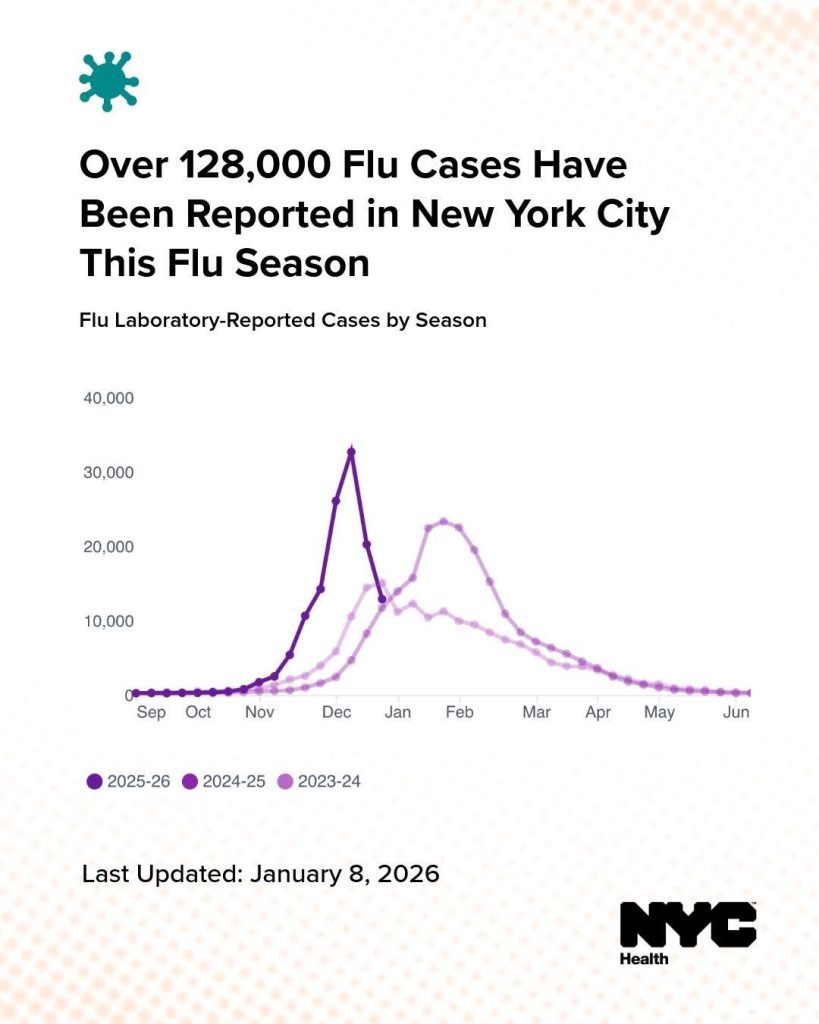
The New York City Department of Health and Mental Hygiene reported that flu cases this season have already exceeded the peak levels of the previous two seasons. A strain of Influenza A, known as H3 or H3N2, has dominated the state’s cases. Ninety-five percent of reported cases in New York have been Influenza A/H3, while just 5% were Influenza A/H1, according to the department’s latest data. Nationwide, H3N2 has also been the dominant strain, accounting for roughly 86% of Influenza A infections.

Influenza, a contagious respiratory illness caused by influenza viruses, can infect the nose, throat, and lungs, leading to mild to severe illness and, in some cases, death, the CDC said. Typical symptoms include cough, sore throat, runny or stuffy nose, body aches, headache, and fatigue.

This season, some doctors have noted unusual gastrointestinal symptoms among patients infected with the H3N2 “super flu.” Reports indicate that many individuals, particularly children, have experienced vomiting of yellow bile, likely caused by suppressed appetite and stomach irritation. Diarrhea has also been observed more frequently in children than adults, raising concerns about dehydration and complications such as bacterial pneumonia.

Data from the New York State Department of Health shows Staten Island alone reported 1,297 flu cases in a single week ending Dec. 27, including 1,035 Influenza A cases, 24 Influenza B cases, and 238 unspecified strains. New York City, unsurprisingly, leads the state in overall cases due to its population density, though statewide totals have reached unprecedented levels this season. Flu activity generally peaks between December and February, suggesting the outbreak may continue for several more weeks.

Medical experts caution that the current H3N2 strain is only moderately covered by this year’s flu vaccine, which was formulated months in advance. Combined with declining vaccination rates nationwide, this leaves more people vulnerable to infection and increases the potential for widespread transmission. The CDC recommends that individuals at high risk—such as older adults, young children, pregnant people, and those with underlying medical conditions—seek antiviral treatment promptly if they develop flu symptoms.

Public health officials are urging all eligible individuals to get vaccinated, practice hand hygiene, and stay home when sick to limit the spread of the virus. While antiviral medications can reduce the severity of illness if administered early, prevention remains the most effective tool.

“This flu season has already proven to be more severe than many expected, but we still have effective tools. Vaccination, early recognition of symptoms, and antiviral treatment—especially when started within the first 48 hours—can significantly reduce complications and prevent hospitalizations, particularly for children, older adults, and people with chronic conditions,” Castillo said.

As the flu continues to sweep through communities, hospitals are preparing for sustained high patient volumes. The CDC reminds Americans that influenza can affect anyone and encourages vigilance, particularly in crowded settings such as schools, offices, and public transportation.

This flu season serves as a stark reminder that, even after years of navigating COVID-19, seasonal influenza remains a significant public health threat. Experts say that staying current with vaccinations, wearing masks in high-risk settings, and seeking early medical care for flu symptoms are key to mitigating the impact of this year’s outbreak.

New Laws Take Effect in NYC in 2026

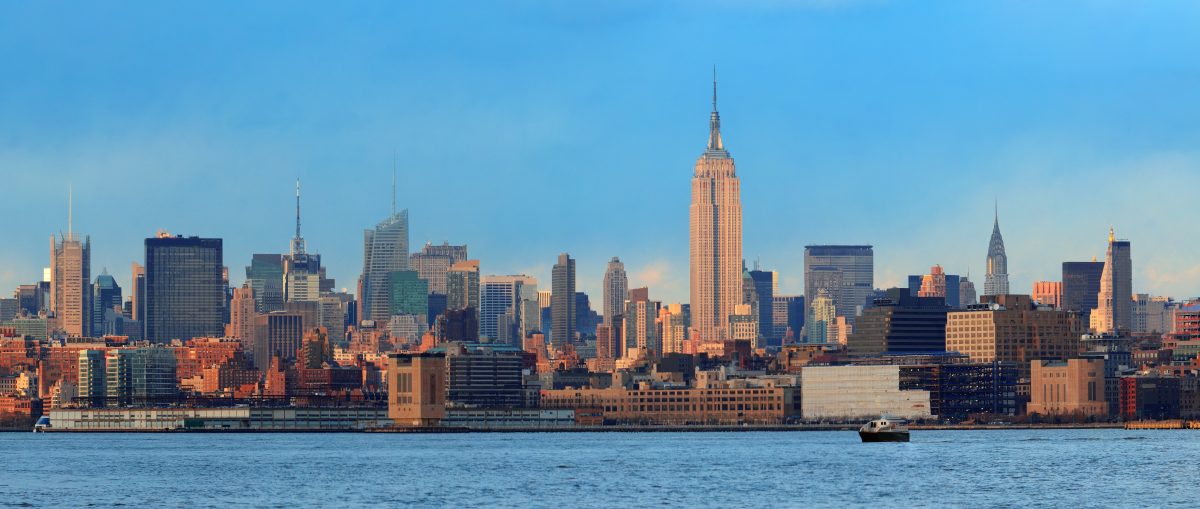
Downtown Manhattan skyline at sunset over Hudson River in New York City

Minimum Wage, Sick Leave and Health Rules Change

By MOHAMED FARGHALY

mfarghaly@queensledger.com

A sweeping set of new laws taking effect in 2026 will bring significant changes for New York City residents, expanding worker protections, reshaping health care coverage and strengthening consumer rights as the city and state continue to respond to rising costs and workplace concerns.

One of the most consequential changes for city workers is the expansion of New York City’s Earned Safe and Sick Time Act. Beginning in late February, employers will be required to provide workers with up to 32 hours of unpaid safe or sick time in addition to existing paid leave. The unpaid time will be available immediately upon hiring and at the start of each benefit year, while the law also broadens the reasons workers may use safe or sick leave. The changes replace the city’s Temporary Schedule Change Law and are expected to affect hundreds of thousands of employees across industries.

Minimum wage increases will also directly impact city residents. Starting Jan. 1, the minimum wage rises to $17 per hour in New York City, matching increases in Long Island and Westchester County. Tipped workers will see corresponding increases in cash wages and tip credits, while salary thresholds for certain exempt employees will rise, expanding overtime eligibility for many workers.

Health care costs and access are another major focus. New laws taking effect at the start of the year require insurers to cap out-of-pocket costs for medically necessary EpiPens at $100 annually and mandate coverage for breast cancer screening and diagnostic imaging when recommended by a physician. Large group health plans will also be required to cover scalp cooling systems used during chemotherapy, a benefit aimed at reducing the financial burden of cancer treatment for patients.


Beyond insurance coverage, the state is moving to strengthen health care systems that serve city residents, including investments in Medicaid, expanded mental health initiatives and new workplace violence prevention requirements for health care employers. Hospitals will be required to implement comprehensive violence prevention programs later in the year, reflecting growing concerns about worker safety.

New York will also allow terminally ill residents with less than six months to live to access medical aid in dying. The law, set to take effect six months after its January signing, permits eligible patients to request prescribed medication to end their life under strict medical oversight. It includes safeguards to ensure that patients are fully informed and capable of making the decision, requiring confirmation from multiple health care providers and opportunities for patients to rescind their request at any time. The legislation marks a significant expansion of end-of-life options for city residents, providing a legal framework for those facing terminal illness to make deeply personal choices about their care and quality of life in their final months.

Consumer protections are also expanding, with several laws designed to address common frustrations for city shoppers. Online subscription cancellations must be easier, retailers will be required to clearly post return and refund policies, and new rules will govern “buy now, pay later” loans. Another law targets so-called surveillance pricing by requiring businesses to disclose when prices are set by algorithms that use consumers’ personal data, a practice increasingly common in online commerce.

For New Yorkers navigating daily work and city life, additional protections are coming into force. Health care employers must implement workplace violence prevention plans and provide training on sexual harassment and assault. Employers will be barred from retaliating against workers who request reasonable accommodations, and new limits will apply to the use of consumer credit history in employment decisions, extending protections already familiar to city workers.

Several city-specific measures are also set to roll out. Amendments to the safe and sick leave law codify paid prenatal leave requirements and expand permissible uses of leave for caregiving, housing-related legal proceedings and public emergencies. New minimum pay standards and safety rules will take effect for grocery delivery and other contracted delivery workers, while proposed legislation could give drivers and app-based delivery workers new rights to challenge wrongful deactivations if enacted.

Not all planned changes are moving forward on schedule. A state law requiring certain new buildings to rely on electric heat and appliances has been temporarily suspended while legal challenges play out, delaying its impact on new developments in the city.

As 2026 begins, the volume and scope of new laws underscore a rapidly evolving legal landscape for New York City residents. From paychecks and paid leave to health care bills and online purchases, the changes are expected to touch many aspects of daily life in the nation’s largest city.

New Travel Ban Could Affect 420,000 New Yorkers

Trump Doubles Travel Ban List, With Major Implications for NYC

By MOHAMED FARGHALY

mfarghaly@queensledger.com

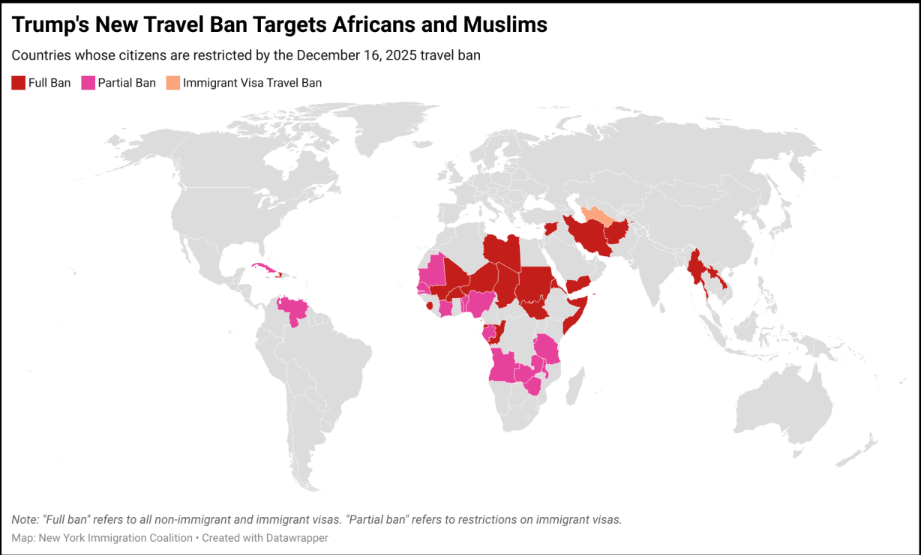
A sweeping expansion of President Donald Trump’s travel ban is expected to have an outsized impact on New York City, particularly in Queens, home to some of the nation’s largest immigrant communities from the affected countries.

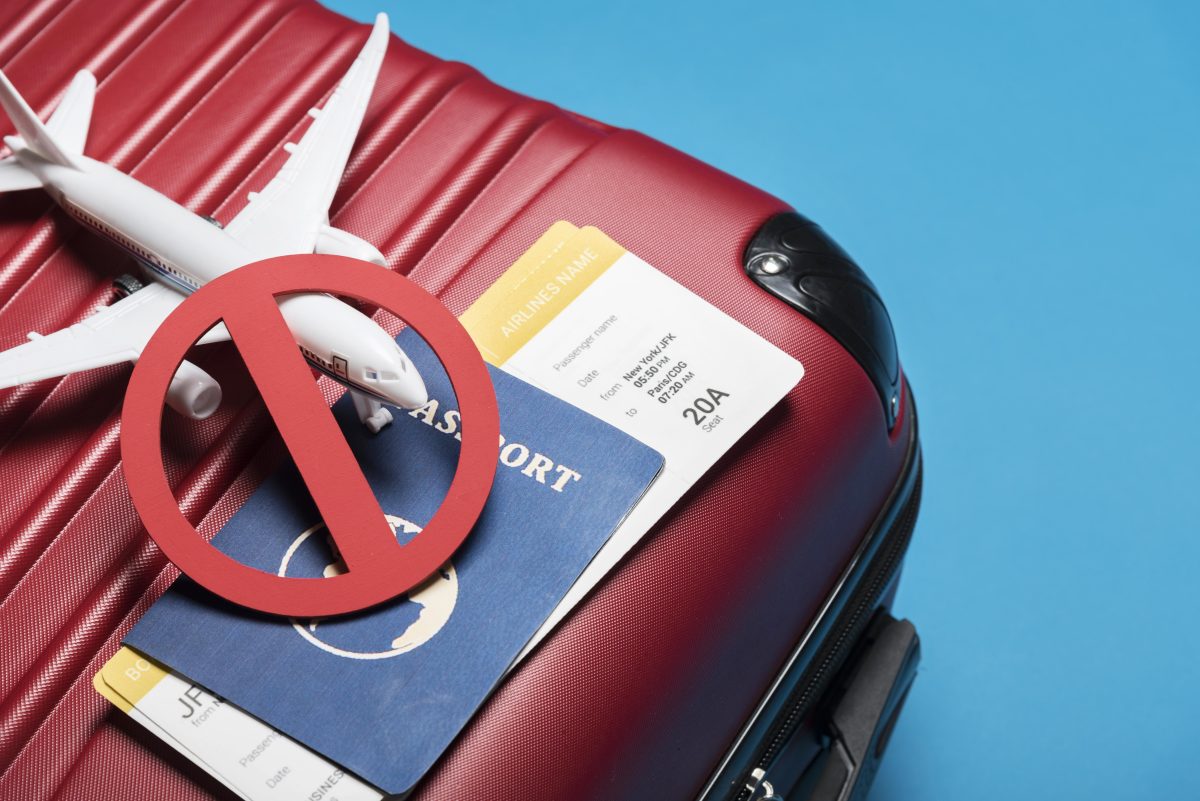
Under a presidential proclamation signed last week, the Trump administration will impose full or partial travel restrictions on nationals from 39 countries and people traveling on Palestinian Authority–issued documents, doubling the scope of a ban announced earlier this year. The restrictions take effect Jan. 1, 2026, and apply to travelers seeking to visit, immigrate to or reunite with family members in the United States.

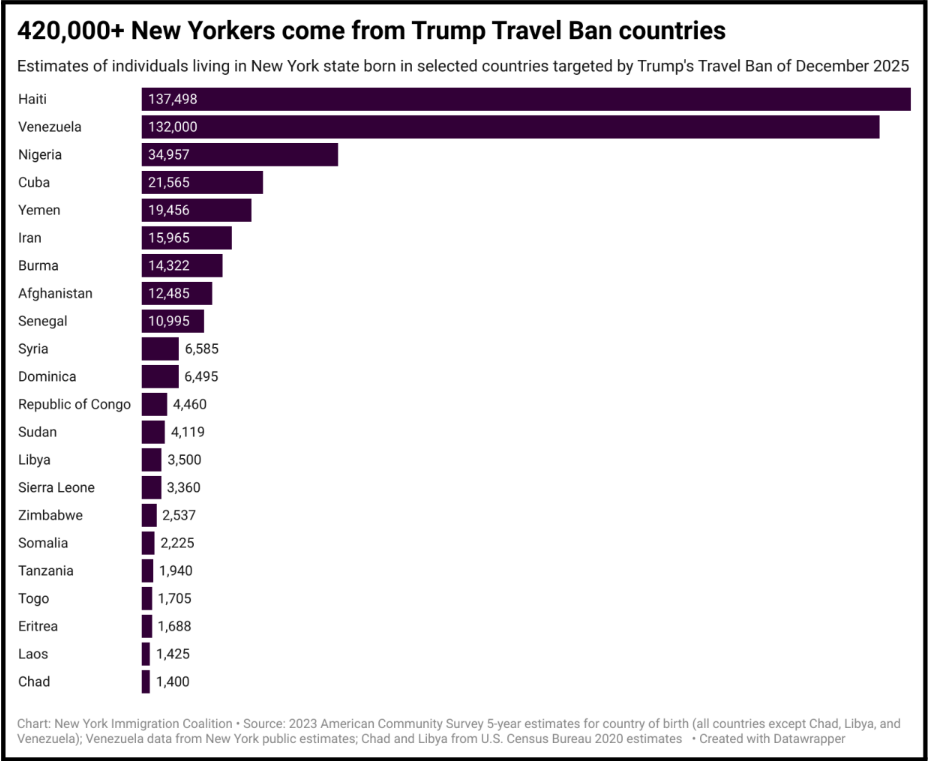
Advocates estimate that about 420,000 New Yorkers come from countries now subject to the ban, according to the New York Immigration Coalition. Many live in Queens neighborhoods such as Astoria, Jamaica, Woodside and Ozone Park, where families often rely on travel for work, education and reunification.

“This discriminatory proclamation, the largest race- and religion-based ban on immigration in contemporary U.S. history, continues the Trump Administration’s unjust assault on immigrant communities. By expanding the Travel Ban, the administration is slamming the door on vulnerable people in a way that is certain to cause widespread harm, including prolonged family separation. Students will be denied from pursuing their education, workers will be blocked from contributing to the economy, and families will be forced to remain separated across borders,” said Murad Awawdeh, President and CEO, New York Immigration Coalition.

The proclamation bars entry for most travelers from Burkina Faso, Laos, Mali, Niger, Sierra Leone, South Sudan, Syria and Palestine for those who do not already hold valid U.S. visas. An additional 15 countries, including Nigeria, Senegal, Gambia, Ivory Coast and Tanzania, face partial restrictions that limit access to tourist, business and family-based visas.

The administration said the restrictions are necessary because of what it described as unreliable civil documents, weak vetting systems, visa overstay rates and national security concerns in the affected countries. It also cited a recent shooting involving an Afghan national as part of its justification for tightening immigration controls.

People who already hold valid visas, lawful permanent residents, diplomats, athletes and individuals deemed to be traveling in the U.S. interest are exempt. Still, immigration advocates say the changes will disrupt families and create uncertainty even for those with legal status.

“This proclamation will separate families and destabilize communities that are deeply rooted in New York,” the New York Immigration Coalition said in a statement, calling the ban discriminatory and disproportionately targeted at African and Muslim-majority countries.

Queens is particularly vulnerable because of its high concentration of residents from countries now affected. New Yorkers from Haiti, Yemen, Togo and Venezuela already represent some of the largest such populations in the United States, and community leaders say the expanded ban will further strain households that rely on relatives abroad for caregiving, financial support and emotional ties.

The new restrictions also eliminate several humanitarian and family-based exemptions that existed under earlier versions of the travel ban, including exceptions for immediate relatives of U.S. citizens and some refugee and special immigrant visa applicants, according to advocates.

The ban applies to anyone outside the United States when it goes into effect and limits visa renewals and extensions, raising concerns that New Yorkers could become stranded abroad or unable to bring relatives to the city.

“The Trump Administration’s expanded travel ban advances his quest to shut down any pathway to citizenship for Black and Brown immigrants. This policy further isolates the United States and deprives our nation of the expertise, culture, and humanity that immigrants bring. We must continue to resist policies rooted in fear and fight for our families, our freedoms, and our future,” said Diana Konaté, Deputy Executive Director of Policy & Advocacy, African Communities Together.

Critics say the policy revives one of the most controversial immigration measures of Trump’s first term and expands it to one of the largest race- and religion-concentrated mobility restrictions in modern U.S. history. The affected countries represent more than 1 billion people, roughly one-eighth of the global population.

The administration said it could revise the list of countries in the future, depending on whether governments improve cooperation with U.S. immigration authorities. For now, immigrant advocates warn that New York’s diverse neighborhoods, particularly in Queens, are likely to feel the effects first and most acutely.

“This expanded travel ban is a discriminatory policy that treats entire nations as suspect and deepens the othering of Muslim, African, and immigrant communities. At Muslim Community Network, roughly 75% of our staff have family members who will be directly affected, and our clients and allies across New York will feel the harm through separation, delayed reunification, lost study and work opportunities, and anxiety for thousands of New Yorkers. New York’s future depends on people being able to move, learn, contribute, and live with their loved ones, not on blanket restrictions that punish families for their passports,” said Husein Yatabarry, Executive Director, Muslim Community Network.

Small Businesses Face Uncertainty Under New Mayor


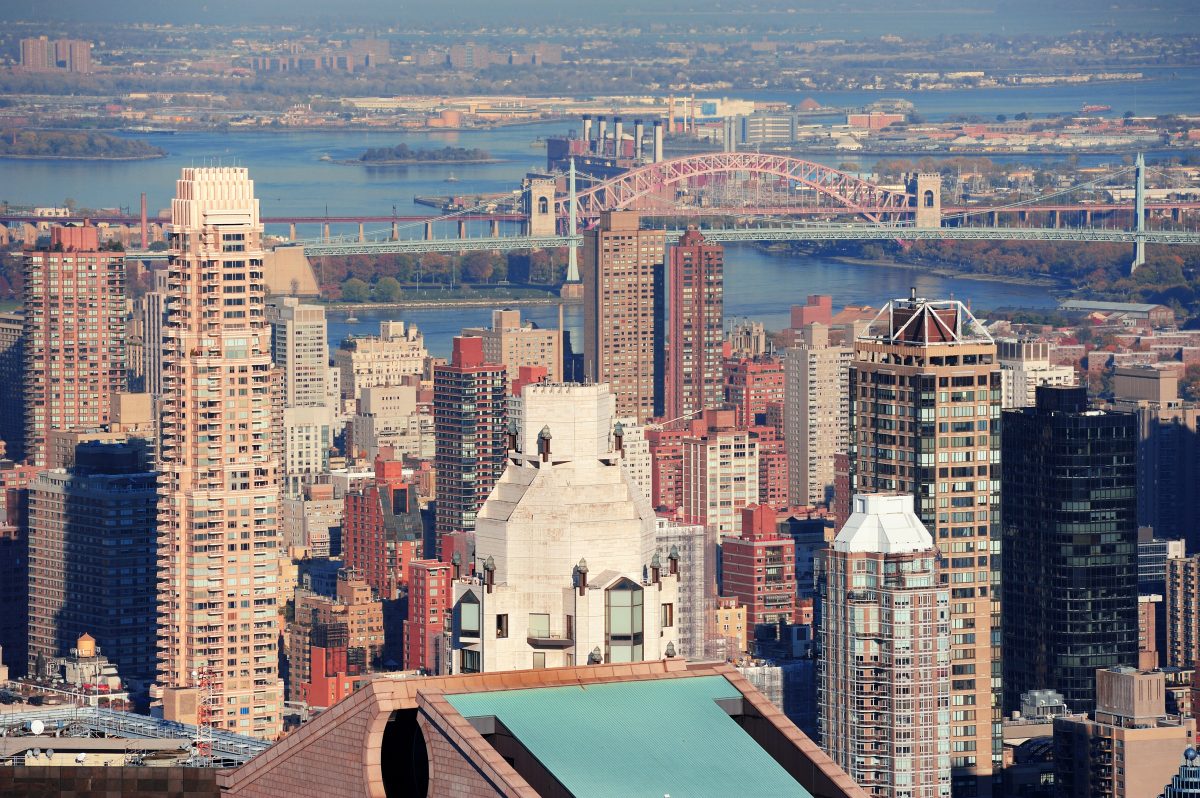
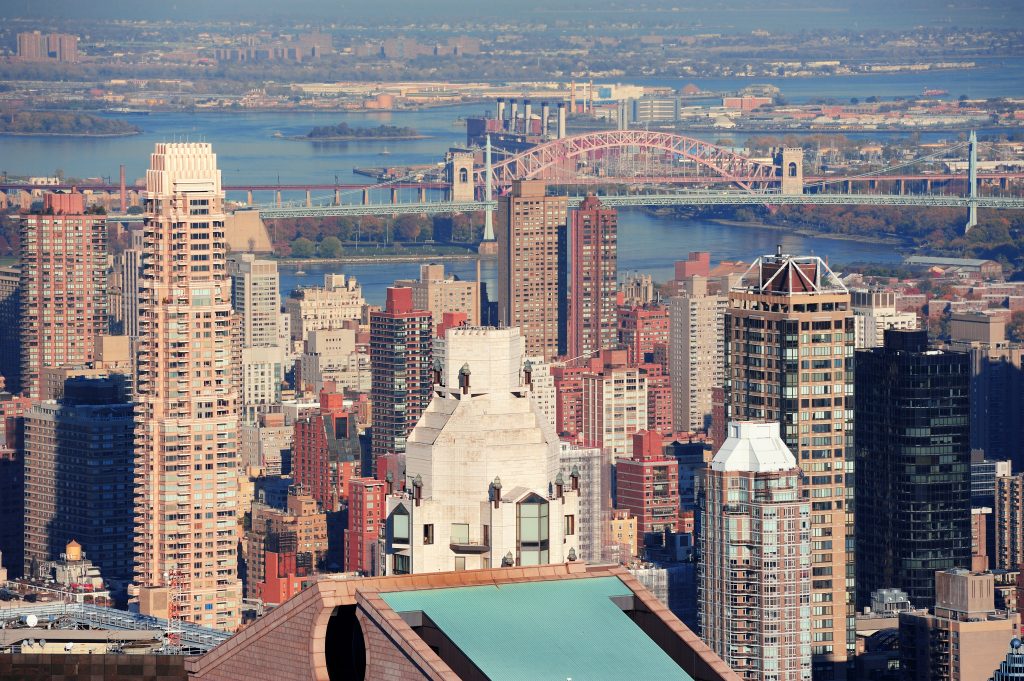
New York City skyscrapers in midtown Manhattan aerial panorama view in the day.

Mamdani’s Policies Raise Questions for Small Businesses

By MOHAMED FARGHALY

mfarghaly@queensledger.com

New York City’s small business owners are watching the early days of Mayor Zohran Mamdani’s administration with a mix of cautious optimism and deep unease as the city’s new leader pushes an ambitious agenda rooted in affordability, worker protections and democratic socialist principles.

Mamdani has proposed sweeping reforms aimed at easing pressure on neighborhood businesses, including cutting city fines and fees for small businesses by 50 percent, increasing funding for support programs by 500 percent and appointing a dedicated “mom and pop Zar” to streamline permits and reduce red tape. His platform also calls for tackling high commercial rents, easing rising Con Edison and water bills and phasing in a $30 minimum wage by 2030, with additional time for smaller employers to adjust.

Supporters say the proposals acknowledge the reality that small businesses face some of the highest operating costs in the country. Critics argue the scope and pace of change could further strain businesses already operating on thin margins.

Mamdani’s relationship with the city’s business community is complex. While his proposals aim to reduce costs and simplify bureaucracy, many owners say steep rents, limited relief and climate-related disruptions continue to threaten their survival.

Much of the interest in Mamdani’s candidacy stemmed from his focus on affordability. His campaign emphasized freezing rents for rent-stabilized apartments and expanding housing development to ease the city’s shortage, moves he argued would stabilize both workers and the small businesses that rely on them.

For some business owners, however, anxiety intensified after Mamdani publicly embraced his political identity.

For small business in New York City the uneasiness that caused stress before Mamdani took office turned into despair after Zohran proclaimed he “… ran as a democratic socialist and will now govern as a democratic socialist.”

“What does that mean?” said one Greenpoint deli owner who witnessed a Mamdani-held rally in that Brooklyn neighborhood a few days after taking office. “I barely make enough money to get by now. How can they run a government owned deli? They can’t survive paying employees $30 and hour.”

The concerns reflect lingering confusion and fear around what democratic socialism would mean in practice for independent businesses. The ideology centers on public ownership or control of major economic drivers such as utilities and transportation, not small retail operations.

“The self proclaimed democratic socialists who have interviewed at The Queens Ledger/BQE media group,” according to Walter Sanchez, its publisher, “… tell us there is a major distinction with utilities and energy companies from the small business owner in the grocery store business. There is also a big distinction from what we know as communism, and that is the government doesn’t own your business and govern your economic viability. That said, there is, without a doubt, a democratic transition, over time, for the economy tied to its core value … a transition from a capitalist to socialist one.”

Mamdani has said empowering everyday workers to influence economic decisions will reduce inequality over time. He has reportedly met with members of the affordable housing development community to speed up construction. But developers say costs remain prohibitive. Recent estimates place the cost of building a single apartment at roughly $800,000, a figure that makes many projects financially unworkable without major subsidies.

Small business owners say similar math problems apply to their operations.

Under former Mayor Michael Bloomberg, who served from 2002 to 2013, the city leaned heavily on public-private partnerships to redevelop major corridors. Large developers bought properties that housed small businesses, giving corporate landlords greater leverage to raise rents and displace longtime tenants.

As New York enters a new era of leadership, employers are also preparing for broader workplace changes. Mamdani’s platform includes expanding worker protections, regulating gig economy platforms, banning noncompete agreements and increasing enforcement by city labor agencies. While he has promised a “fix, don’t fine” approach for small businesses, larger corporations would face tougher scrutiny.

Business groups say the combination of higher wages, rising taxes and expanded enforcement could reshape the city’s economic landscape. At the same time, faster permitting, increased case management and reduced fines could offer meaningful relief if implemented effectively.

For many owners, the question is whether the promised support will arrive quickly enough.

You Can’t Become King Without Making Some Enemies.

By Cole Sinanian

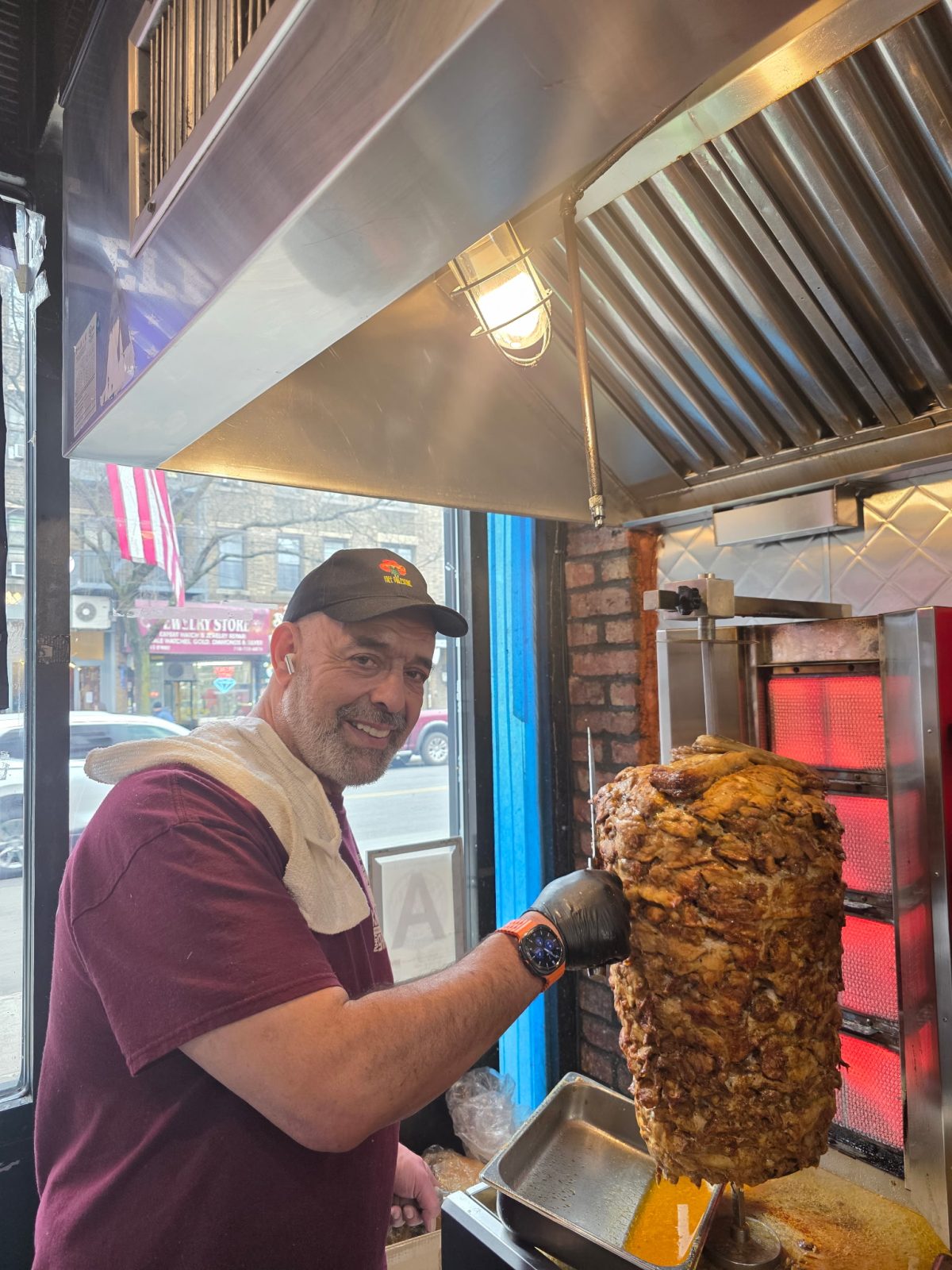
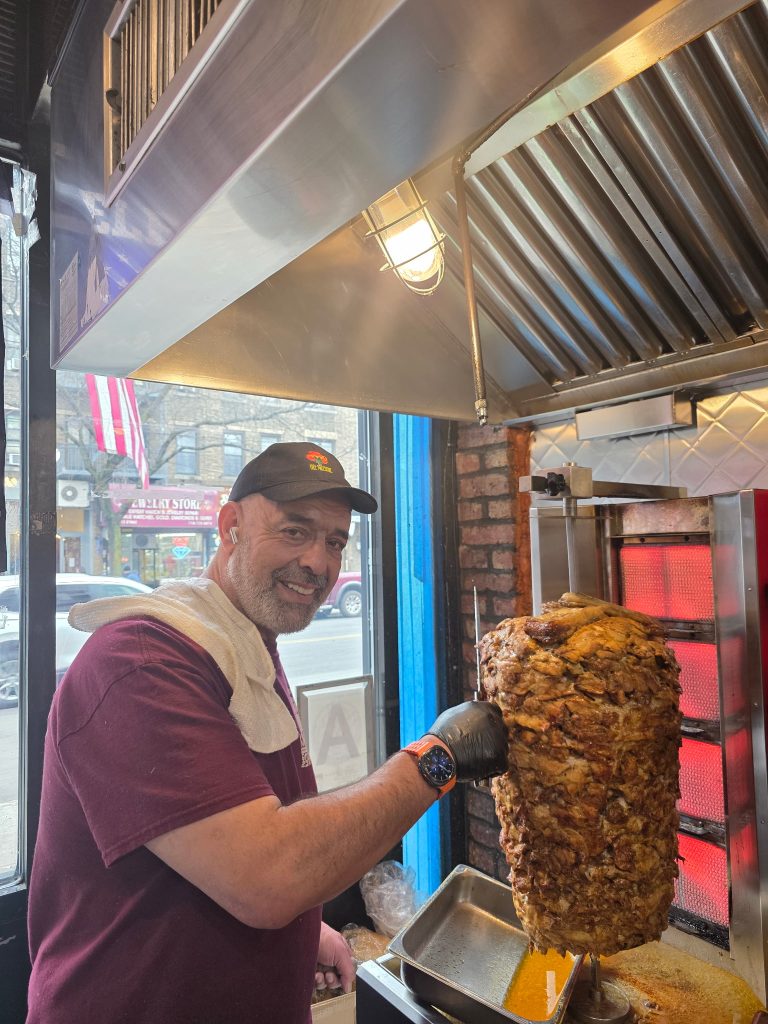
The King of Falafel is a busy man. On a recent Friday evening, 60-year-old Fares “Freddy” Zeideia bounces around his Astoria restaurant, checking in on diners and offering crispy knobs of fresh falafel wrapped in a napkin to everyone who enters, free of charge.

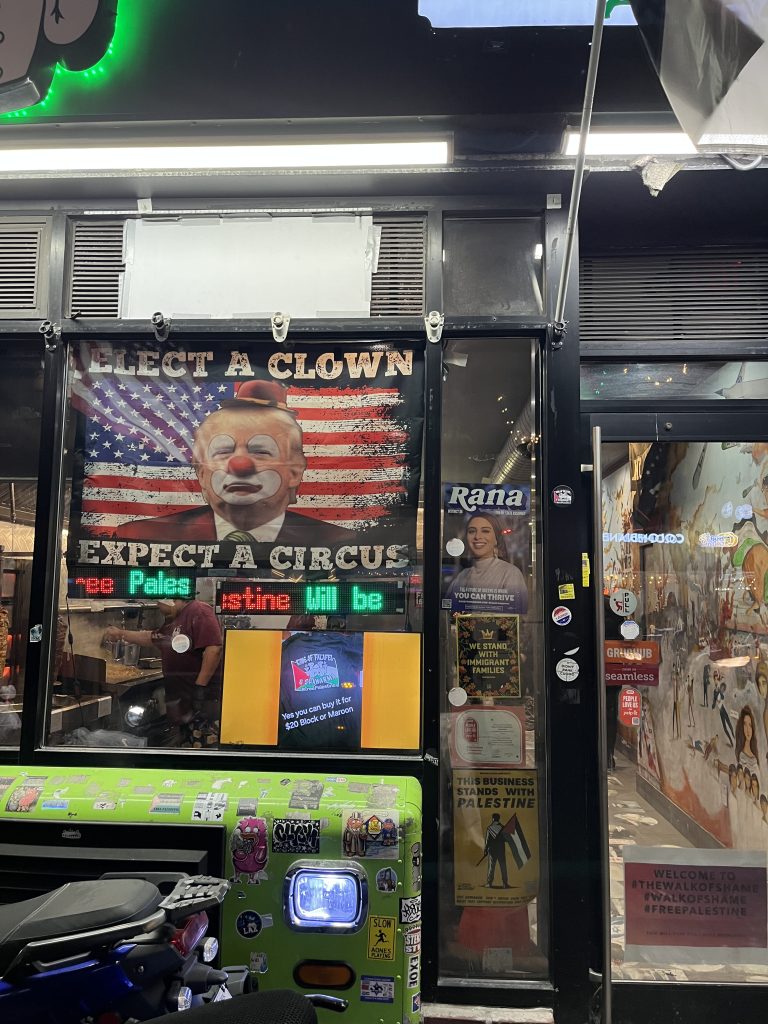
Also present are a group of building consultants who are here to help Zeideia deal with a potentially expensive headache: he’s facing a fine of up to $6,000 or more from the New York City Department of Buildings (DOB) for an allegedly unauthorized light-up sign that hangs from his storefront. Zeideia insists the sign — which reads “STOP GENOCIDE” and “#FreePalestine” — has a permit, and suspects that the complaint that brought DOB inspectors to his restaurant came from someone who was offended by his pro-Palestine messaging.

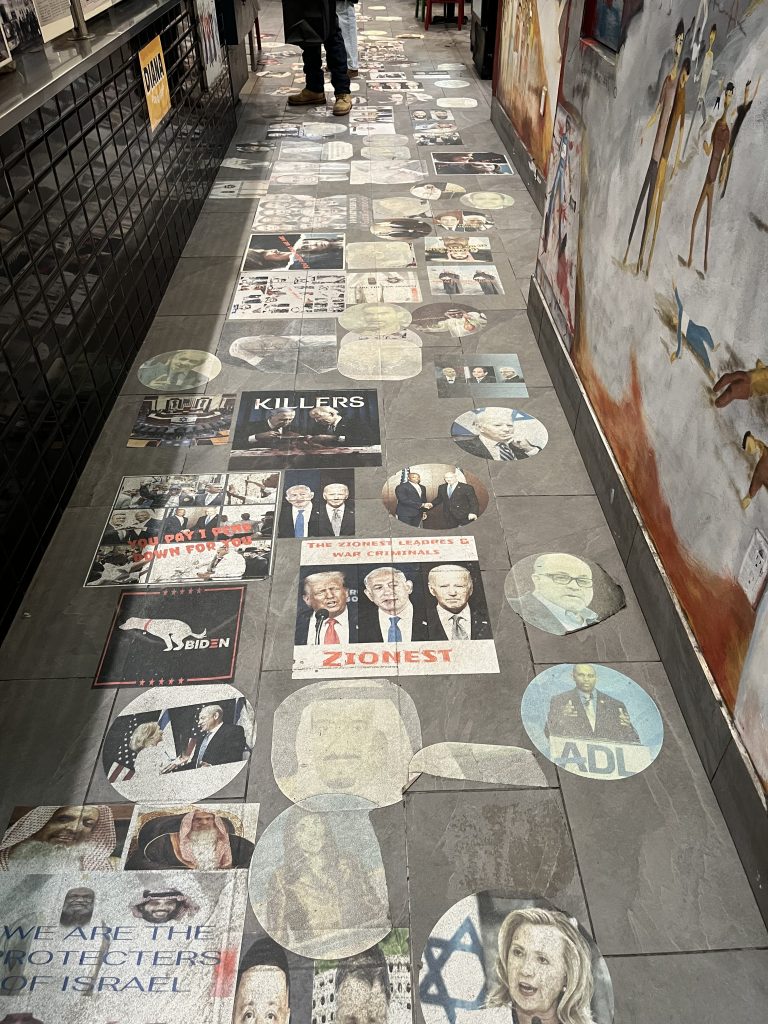
Born and raised in the village of Ein Yarbud in occupied Palestine, Zeideia does not shy away from inflammatory politics. The entirety of his restaurant, King of Falafel & Shawarma, is decorated in the spirit of the Palestinian resistance against the State of Israel. Among its decor are a street-facing sign depicting President Donald Trump with a clown’s nose and the words “Elect a Clown, Expect a Circus;” a large mural in the dining room of Palestinians resisting the Israeli military with the words “No Migration Except to Jerusalem;” and, perhaps most controversial, a “Walk of Shame” of stickers showing the faces of world leaders and celebrities on the floor leading from the sidewalk outside the restaurant’s door all the way into the toilet bowl in the bathroom at the back. The idea, Zeideia explains, is to allow patrons to step, urinate and defecate on the faces of the people he considers complicit in Israel’s war crimes.

The list is expansive. The faces of Benjamin Netanyahu, Barack Obama, Donald Trump, Hilary Clinton, Eric Adams, and Indian Prime Minister Narendra Modi adorn the floor alongside DJ Khaled — the Palestinian-American music producer criticized for his perceived silence on Israel’s destruction of Gaza — as well as authoritarian Arab leaders like Saudi Crown Prince Mohammed Bin Salman, United Arab Emirates president Mohamed bin Zayed Al Nahyan, former Syrian dictator Bashar al-Assad, and the Egyptian president Abdel Fattah el-Sisi.

”In Hollywood they have the Walk of Fame,” Zeideia said. “Here we have the Walk of Shame.”

The display has brought fines and harassment. A complaint to the Department of Buildings logged in November 2023 described “posters on the sidewalk and the ground in front of the restaurant,” that are “large” and “share their political beliefs,” which the DOB later inspected without issuing a violation. In May 2024, Zeideia was fined $6,350 for the allegedly illegal light-up sign in front of his restaurant. However, Zeidea claimed that in 2023 the DOB inspected the sign, made a few adjustments and issued a permit, which is visible on the sign’s underside.

A more recent complaint, logged in September 2025, concerns the same sign and accuses it of “very inappropriate messages,” highlighting that it is near a bus stop that kids use and therefore “needs to come down.” DOB inspectors came again to inspect the sign on December 16, concluding that the sign was unauthorized, despite the permit on its underside, and told Zeideia that they would return for a more thorough inspection in the coming weeks.

But perhaps more concerning were the death threats. Zeideia described his employees regularly receiving calls to the restaurant from people threatening to burn it down and kill him and his family.

“They start talking, saying ‘tell your boss we’re gonna kill him,’” Zeideia said. “He better take that shit out or he’s gonna lose his life.’”

Once, a TikTok influencer took a viral video of the restaurant and its many stepped-on photos of Saudi Crown Prince Mohammed Bin Salman. Someone sent the video to a Saudi Arabian influencer, and within hours, Zeideia had some 40,000 one-star Google reviews.

“They were so happy, they thought they shut me down,” he said. “Then I ordered 30 more pictures of the prince, I expedited it, I paid $300 more. Then I put it on the street the next day.”

Another time, an Egyptian woman was offended to see the president of Egypt, Abdel Fattah el-Sisi, on the walk of shame. She entered the bathroom, removed her underwear, and stuffed it into the toilet bowl, causing the bathroom to flood.

It’s annoying, yes, but Zeideia is used to brushing off threats. He’s dealt with them since he first opened his food truck back in 2002, which eventually evolved into his current restaurant on Broadway, opening in 2016. Just after 9/11, this was an uncomfortable time to be an Arab-American. Zeideia faced regular threats, to which he responded with falafel.

“People used to pass by and say ‘go back to where you came from,” Zeideia recounted. “They’d say ‘you’re a terrorist,” I’d say ‘no, I’m not a terrorist. Have some falafel. And I started giving falafel to everyone.”

While the DOB has yet to issue a second fine, Zeideia’s customers have rallied to support him and his message. A GoFundMe page started by a 22-year-old Long Island resident named Kyra Sorkin has already raised close to $13,000 in just over a week, nearly double the expected fine. Sorkin, despite living a 30-minute train ride away from Astoria, has long been a loyal customer at King of Falafel & Shawarma. When Zeideia posted an Instagram video explaining the situation, Sorkin — who’s experienced in crowdfunding campaigns — reached out, offering to help him.

“It’s some of the best Palestinian food I’ve ever had,” Sorkin said. “It’s a place that I want to support, that I always bring friends to when they visit New York.

She continued: “I really appreciate how steadfast Freddy is in his advocacy for his people. I think that’s really nice to see, especially these days when it’s so intimidating.”

But the support of his community can do little to alleviate the immense suffering in Palestine, Zeideia said. When Israel’s bombardment of Gaza began after October 7, 2023, his stress level reached new heights. So distraught was Zeideia that his chest would seize up in pain, causing him to collapse. A cardiologist told him that he had been having miniature heart attacks, and that he needed immediate open heart surgery.

“I’m 60,” Zeideia said. “Looking at the people in Gaza who are dying in their tents…what could possibly happen? I’m not gonna be out on the street worrying about dying. I’ll have medication, I’ll have food, I’m not gonna die of hunger. How about these people who can’t eat, who are bones?”

How Local Business Owners Can Grow on Instagram

Instagram has become one of the most important platforms for local businesses that want more visibility and customer engagement. It is not only a place to share photos. It is a place where people discover nearby shops, explore services, and decide where to buy next. For local business owners who want to grow, even a few small but strategic actions can produce meaningful results. In this article, you will learn two practical tips that help build trust, attract nearby customers, and bring long term benefits to your business.

Create Locally Relevant Content That Builds Trust

Local audiences want to feel connected to the businesses in their area. They respond better to brands that show real faces, daily activities, and the character of their community. This is why creating content tailored to your local environment can make a huge difference. Share behind the scenes moments of your team preparing products or assisting customers. Highlight regular visitors who enjoy your service. Capture small events in your neighborhood and show your involvement in the community.

Short Reels can be especially effective. A quick clip featuring how you prepare your morning offerings or a time lapse of your service routine helps customers understand your business better. Realistic content builds trust. When people see that your business is active and consistent, they are more likely to visit you. Do not hesitate to collaborate with other local brands either. A shared post or Reel can instantly expose your business to new audiences in your area. User generated content can support this strategy as well. Encourage customers to tag your location or mention your business when they post photos. Repost these on your page to show appreciation. This helps create a friendly and familiar tone that attracts more local engagement.

Use Targeted Instagram Features to Reach Local Customers

Instagram offers several tools that help local businesses appear in relevant searches. Geotags, location stickers, and local hashtags help place your content in front of people browsing in your area. Use hashtags that combine your service and city name. For example, a coffee shop in Austin may use hashtags like #AustinCoffee or #AustinEats. This improves discoverability and increases the chance of being found by nearby users.

Stories can also support your reach. Add a location sticker to your Story so Instagram includes it in the local Story feed. Many users check these to see what is happening around them. If your Story appears there, you instantly gain new local views.

Right in the middle of your Instagram strategy, consistency matters the most. It is the foundation for achieving steady growth on Instagram over time. When you regularly post content, use local tools, and engage with your community, Instagram starts pushing your account to more potential customers. This is how visibility grows in a natural and sustainable way. Local collaborations are another effective tool. Partner with nearby creators, local photographers, or even other business owners. A mutual shoutout introduces your business to a fresh audience that is already geographically relevant. This type of attention often leads to real visits, purchases, and new customer relationships.

Final Thoughts

Growing your local business on Instagram is entirely achievable with focused action and consistency. The two tips in this article show how powerful locally relevant content and targeted platform features can be. These approaches help you reach people in your area, build trust, and stay present in the minds of potential customers.

Premium Meal Service, Feast & Fettle, Brings Chef-Crafted Meals to LIC and Astoria

In the heart of Long Island City and Astoria, where schedules are packed and family time can feel limited, a new kind of mealtime support is arriving. Feast & Fettle, a meal delivery service known for its thoughtful approach to dinner, is now serving homes across this part of Queens.

The service, which recently expanded into the neighborhood, offers a practical solution for families and working professionals who want to eat well but often run short on time. Unlike traditional takeout or meal kits, Feast & Fettle provides fully prepared meals made by in-house chefs. Each item is cooked from scratch, delivered fresh—not frozen—and arrives ready to heat and serve.

For many households in Astoria and Long Island City, this model provides relief from the daily scramble of dinner preparation. After a long day, cooking can feel like one more item on a never-ending list. Feast & Fettle eliminates the planning, shopping, and cleanup, while still offering the kind of meals people feel good about serving to their families.

The weekly menu rotates with seasonal offerings, including everything from hearty pasta dishes to lighter options like fresh salads and grain bowls. Members choose their meals in advance, tailoring each order to fit their household size and dietary preferences. A typical week might include roasted chicken with root vegetables, lemon orzo salad, or a vegetarian chili. All meals are portioned generously and designed to hold up well in the fridge for several days.

Each delivery is coordinated by a local team familiar with the area, ensuring your meals arrive reliably and on time. Whether you’re walking home from the subway at Queens Plaza or wrapping up soccer practice at Queensbridge Park, your order is already on its way—packed with care and ready to serve.

The company’s expansion into western Queens comes at a time when more families are looking for ways to simplify the everyday without giving up quality. Feast & Fettle’s approach bridges the gap between convenience and care. With no cooking required and no need for last-minute grocery trips, members can focus more on time together and less on what’s for dinner.

What sets the service apart is its commitment to both quality and community. Meals are prepared in small batches, using fresh, locally sourced ingredients whenever possible. Every step, from cooking to delivery, is handled with attention and consistency.

Membership is flexible and designed with busy households in mind. Families can skip a week, change portions, or adjust orders as their schedules shift. For those balancing work, school, and everything in between, the ability to rely on dependable, nutritious meals has quickly become more than just a convenience. Feast & Fettle is now part of the weekly rhythm.

As Feast & Fettle continues to grow, its focus remains on being a steady presence in the homes it serves. In places like LIC and Astoria, where the pace is fast and family time is precious, that support is already making a difference.

If you’re looking for a way to reclaim weeknights and spend more time with family, Feast & Fettle is ready to help. Their mission is simple: nourish your household so you have one less thing to think about. Get 20% off your first week with code BQE. Become a member here:  Feast & Fettle.

Lithuanian President Visits Maspeth Church Facing Closure

Lithuanian Heritage on Display at Queens Landmark Church

By MOHAMED FARGHALY

mfarghaly@queensledger.com

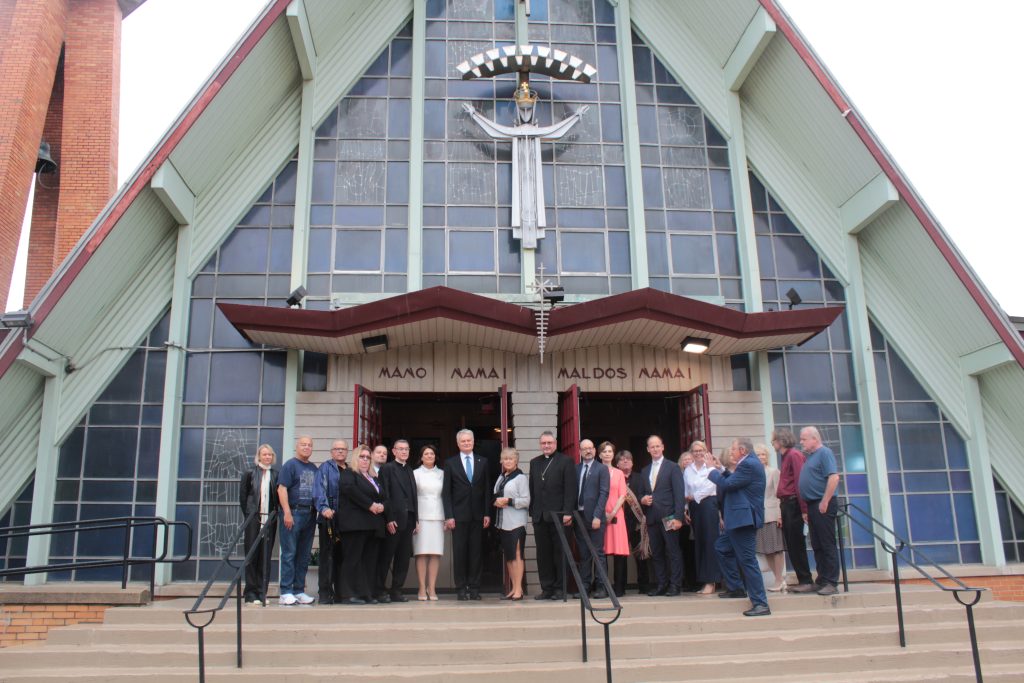
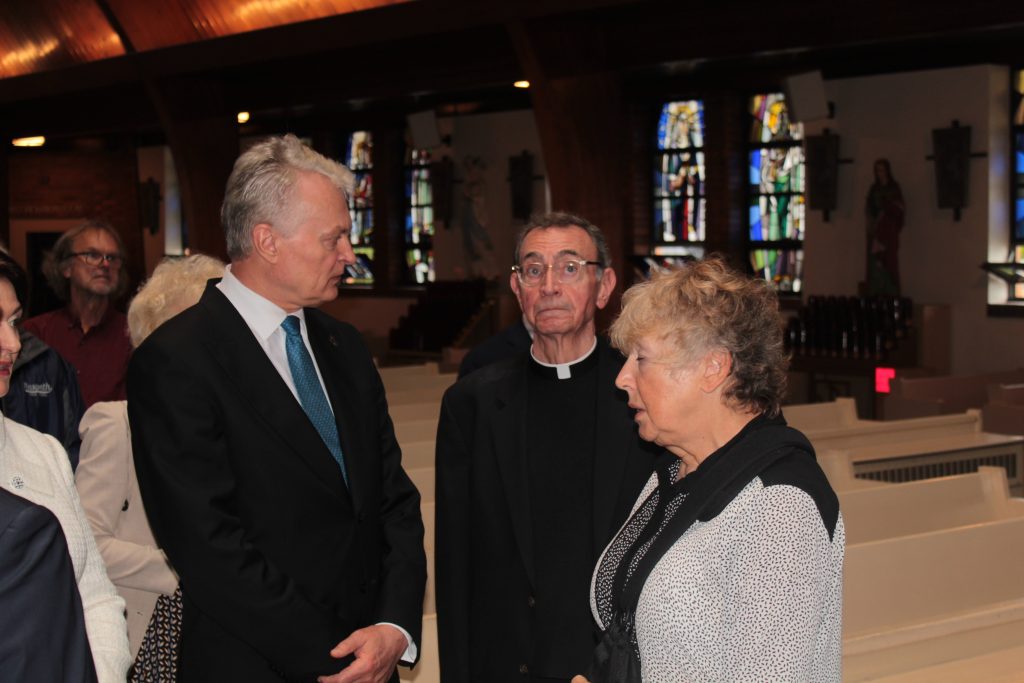
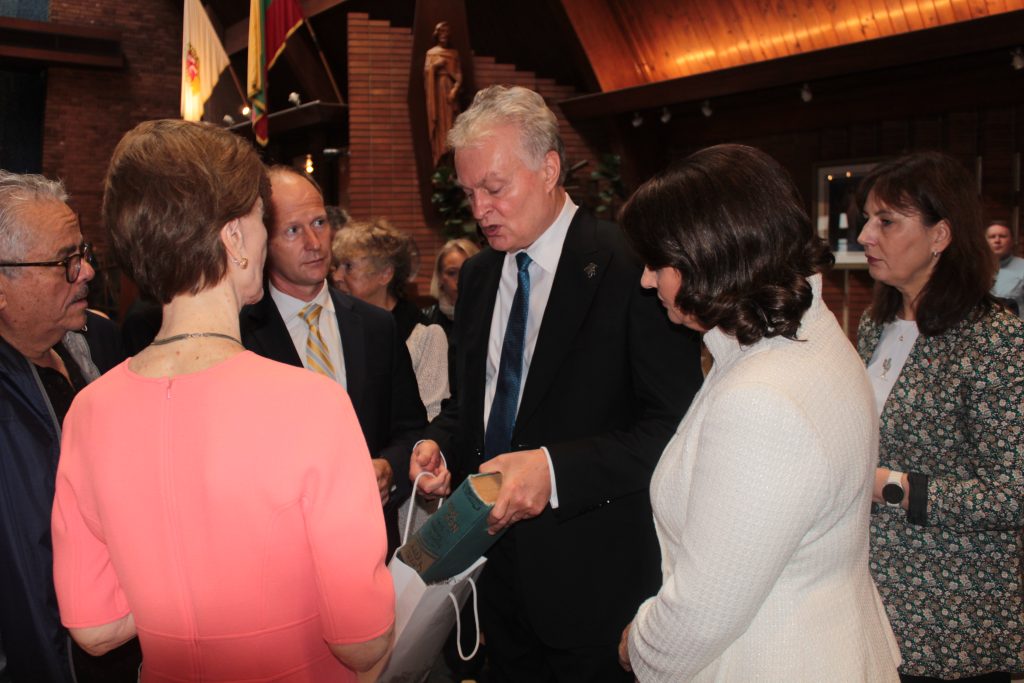
Lithuanian President Gitanas Nausėda and First Lady Diana Nausėdienė made a rare visit to Maspeth’s Transfiguration Church on September 25, shining a spotlight on a neighborhood landmark that has been a spiritual home for generations of Lithuanian-Americans — and is now teetering on the brink of closure.

The 1962 church, built by Lithuanian immigrants during a time when religious practice was suppressed in Soviet-occupied Lithuania, has long served as a spiritual and cultural hub, the church is renowned for its Lithuanian-crafted artwork and cultural significance, but costly repairs and a dwindling congregation have left its future uncertain. Nausėda, who was in New York to attend the United Nations General Assembly, toured the church at 64-25 Perry Avenue and praised the community’s efforts to preserve its history.

Parishioners and church staff guided President Nausėda and the First Lady through the church, highlighting its Lithuanian-crafted artwork, distinctive architecture, and the historic features that have made Transfiguration a cultural and spiritual landmark for decades.

“Today we visited the Church of Transfiguration in Maspeth, NY. Built by Lithuanian Americans in 1962, when faith was suppressed in Soviet-occupied Lithuania, it reminds us of WWII horrors, forced migrations, and also the fight for freedom, in which the U.S. played a vital role. Grateful for the efforts to preserve this church!” Nausėda wrote on social media platform X.

The visit comes as the church faces significant financial challenges. Repairs to the building, which includes the church structure, a rectory, and a convent now rented by the Lithuanian Catholic Relief Association, are estimated at more than $1.3 million, far exceeding the parish’s budget. Attendance has dwindled to roughly 160 to 200 parishioners on weekends, and the parish struggles to cover the building’s operating costs.

“The president of Lithuania came in today, the consulate arranged for the him to visit transfiguration church, because it has a great history with the Lithuanian people. It was built as a Lithuanian national church, and most of the artwork in it was done by Lithuanian artists, and we’d love to have it preserved,” said Rev. Msgr. Joseph Calise, pastor of St. Stanislaus Kostka Parish, which merged with Transfiguration in 2019.

Calise emphasized the ongoing financial strain and the need for external support to maintain the church. “Part of the conversation was on getting it landmarked. And that causes problems, because the difficulty that we have as a parish is that even if the repair works are done, we don’t have enough people in the congregation to actually sustain the building much longer. There are a lot of costs involved in running the building, and the people coming just there aren’t enough to meet the monthly costs of the building,” he said.

Calise said an ideal scenario would involve an outside organization purchasing the building and converting it into a museum to preserve its Lithuanian art and cultural heritage. “So we really need an outside group, an outside society, to actually just buy the building and the property, have it deconsecrated and make it a museum, or something like that, to preserve the art. That would be the best ideal, ideal scenario if people want to preserve the artwork, because we just don’t know how much longer the parish can sustain itself,” he said.

Calise said he hopes the president’s visit will raise awareness and potentially encourage groups interested in preserving Lithuanian art in the United States to step in. “The reality is, my hope would be that his influence would be in finding some society that wants to preserve Lithuanian art in the United States, and that he would be able to convince them, then to take over the building itself, to just buy the building and the properties and preserve it as a museum,” he said.

The church has long been a cornerstone of the Lithuanian-American community in Maspeth, but parishioners say dwindling attendance and high repair costs threaten its future. Calise said the parish continues to explore options to sustain the congregation and preserve the historic artwork. “There is no denial that it is a beautiful church. There’s no denial that the Lithuanian influence of Lithuanian art is quite clear. So it was an honor to be able to have him and welcome him. I hope he got a sense of both sides of what’s going on, not only the sense of what we’d love to preserve, but also a sense of our daily struggle to keep the building open,” Calise said.

As Transfiguration Church navigates the challenges of dwindling attendance and costly repairs, the visit from Lithuania’s president underscores both the community’s deep cultural roots and the urgent need to preserve a landmark that has stood as a spiritual and artistic home for generations.

Fill the Form for Events, Advertisement or Business Listing