



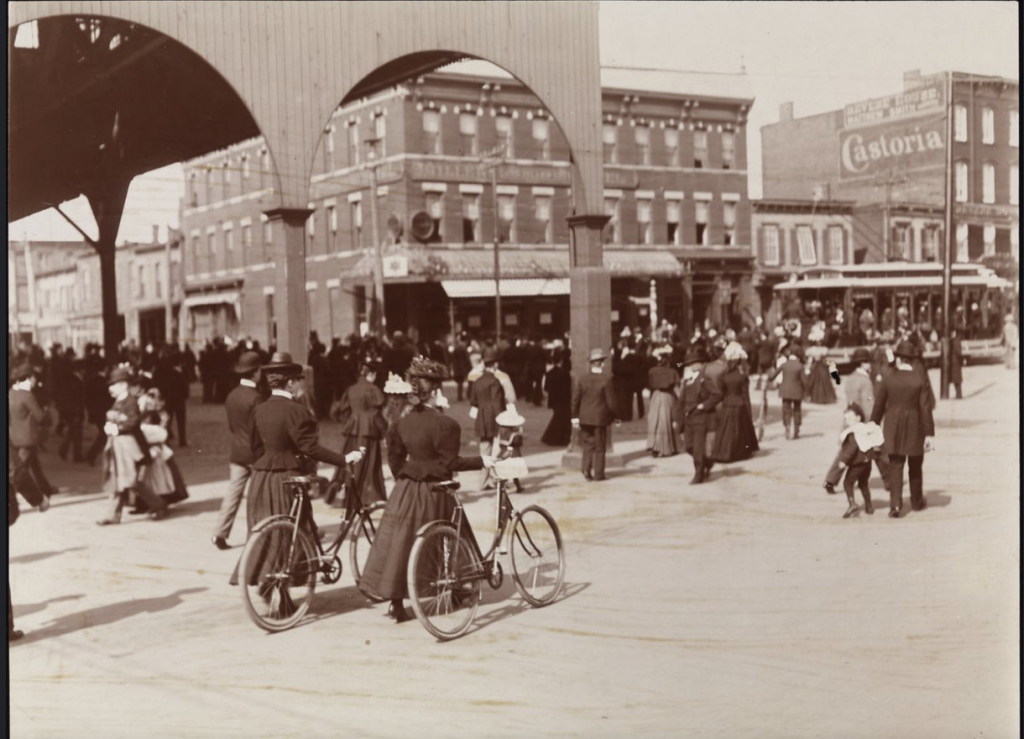
Now a toddler center, this LIC street corner was once a favorite gambling spot of the NYC elite.
GEOFFREY COBB | gcobb91839@Aol.com
Author, “Greenpoint Brooklyn’s Forgotten Past
Today the innocuous Kuei Luck Early Childhood Center at 2-03 Borden Avenue in Long Island City occupies a squat, forgettable, gray building, where it teaches toddlers. The heavily renovated building, though, hides a colorful past. The site was once the legendary Miller’s Hotel. Until the construction of the Queensboro Bridge in 1909 and the Pennsylvania railroad tunnel the following year, it was the most popular bar in Queens and on all Long Island. The hotel bar was reputed to be the largest in New York City. The twenty bar tenders who worked the large horseshoe shaped mahogany bar there often served 300 customers, who stood six deep around the bar. The income of the hotel was frequently said to be a staggering $10,000 a day, at a time when $5,000 would have bought a large home in Brooklyn.
The owner of the bar was the affable and charming Tony Miller, a man who had run hotels in Manhattan and Bayside prior to taking control of the hotel in 1872. Miller had previously served on the New York City Council representing Manhattan, where he was known as the “Smiling Alderman.” He became a friend of all the major Democratic politicians in New York City, including Richard Croker, Senator Tim Sullivan and other leaders who were frequent visitors.
The hotel had a perfect location, situated directly across from the Long Island Railroad depot travelers exited before taking the Manhattan ferry. A generous soul known for his philanthropy, Miller made a fortune there, which allowed him to dress regally. He was often seen in a light-colored suit with a white tie, a hat like Buffalo Bill and diamonds in the buttonholes of his shirt.
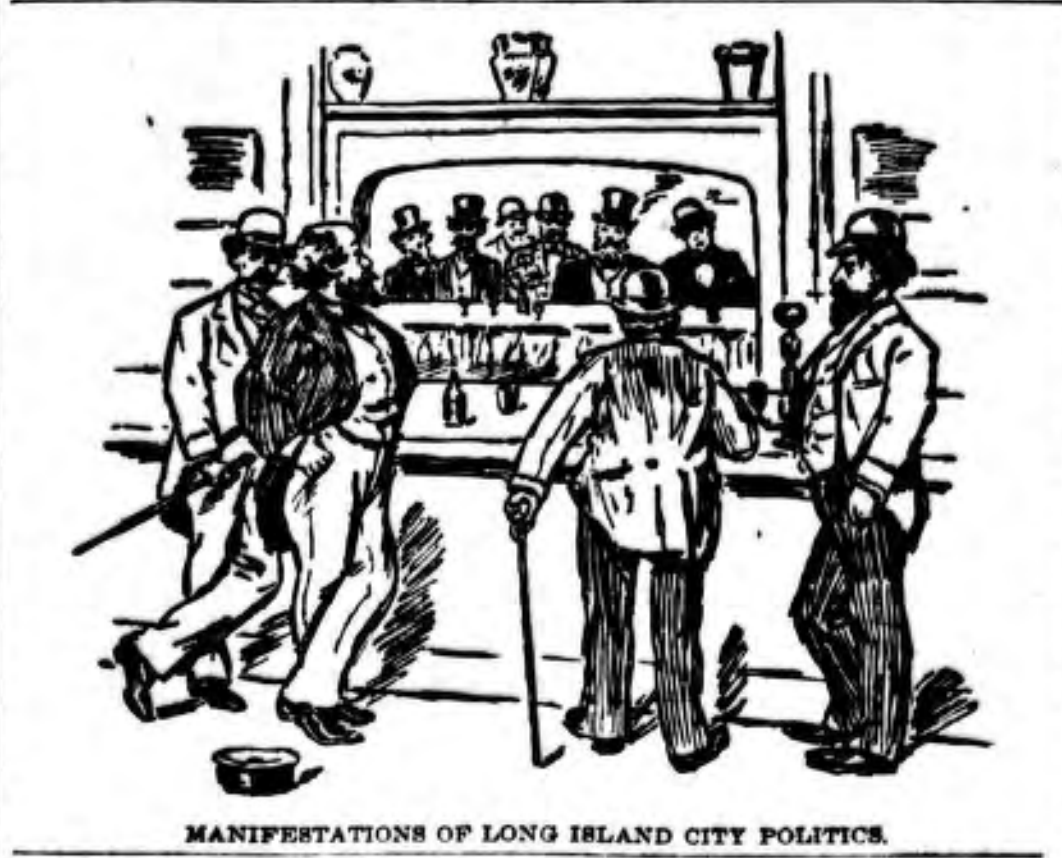
A cartoon drawing from the New York Tribune of the Miller Hotel’s bar. Photo via Geoffrey Cobb.
Celebrities frequented the place. In 1888, World Heavyweight champion John L. Sullivan returning from a friend’s funeral bought all the customers of the bar a drink, the first of Sullivan’s regular visits. Millionaire “Diamond Jim” Brady and his girlfriend soprano Lillian Rusell were frequent guests there. Teddy Roosevelt visited Miller’s prior to embarking for Cuba with his Rough Riders, as well as ex-president Grover Cleveland, who was spotted drinking at the hotel bar.
The hotel was the place bar-none to gamble in New York City. The Las Vegas of its day, dozens of bookmakers frequented the bar. There was a 24/7 non-stop poker card game going on in a room in the back. In 1919, The New York Times reported, “Whenever the “lid” was clamped down in New York City or Brooklyn, the sporting fraternity went to Long Island City and made headquarters at Miller’s. At such times, poolrooms and gambling places were clustered thick about the place, and winnings were spent in the big, gay barroom.” Famous politicians with massive gambling habits like Big Tim Sullivan, Tammany Boss Richard Croker and State Senator Patrick McCarren were regulars at the hotel.
The bar was for decades ground-zero of Queens politics. In 1888, The New York Press reported, “Long Island City exists on politics. Its politics plunge its inhabitants into a vortex of cursing, swearing and disorderly conduct.” It reported in a column on the hotel, “In Times of political excitement, the representatives of every political faction and party gather there.”
Long Island City was once an independent municipality run by Mayor Patrick “Battle Axe” Gleason, a six foot 280-pound terror with arms like a blacksmith, who lived for decades in the hotel. Gleason was embroiled in the politics and frequent violence of the hotel. In 1890, he assaulted Long Island Star journalist George Crowley there, breaking his nose. Sentenced to five days in jail and a $250 fine, he failed to learn his lesson. Later at the hotel, Gleason also threw a cup of coffee in State Senator Birdsall’s face and might have attacked him bodily had friends not restrained him.
Gleason’s attacks were not the only violence there. The New York Press reported, “The place has been the scene of scrimmages and shootings.” In 1891, Long Island City’s Horse carriage line’s superintendent Alfred Moulton was shot in the back at the bar by a disgruntled car driver Moulton had fired. That same night, former Long Island City Police Commissioner William Williams, narrowly escaped death when a drunken former friend leveled a revolver at him but was subdued. The attacker then sat down and finished his drink before leaving.
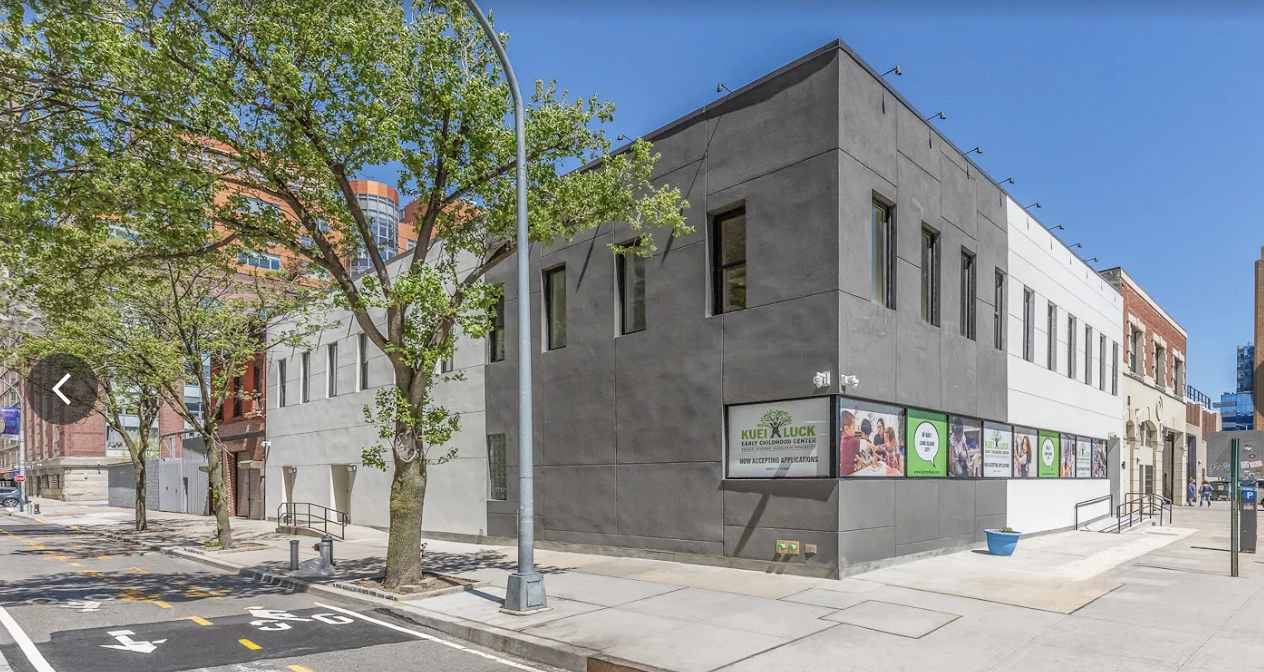
The Kuei Luck Early Childhood Center on Borden Avenue in LIC was once one of New York’s most infamous political hangs. Photo via Google Maps.
In 1897, Miller died and the hotel began experiencing a slow, steady decline. In 1910, the Pennsylvania Railroad and the LIRR opened the East River tunnels, robbing the hotel of its ferry commuter clientele. The hotel finally closed in 1917, and the building was sold off in 1919, marking the end of an era.
The building was converted into a phonograph factory, and later became a warehouse. In 1975, a fire gutted the third floor, and the once elegant hotel became a dilapidated eyesore. In 1978, Anthony Mazzarella opened the Waterfront Crab house in the old hotel, which again attracted celebrities such as Paul Newman, Ed Asner and Maureen O’Hara. Hurricane Sandy badly damaged the crab house, and, after Mazzarella’s death, the restaurant closed in 2015. In 2020, the building was heavily altered when it became a preschool center.
A December 18, 1888, the New York Press article reported on the electric buzz the hotel created, describing Tony Miller’s hotel as “the hub of Long Island City” and “The most extra-ordinary hotel in the world.” Looking at today’s drab building, it is hard to imagine the building’s rich past.