


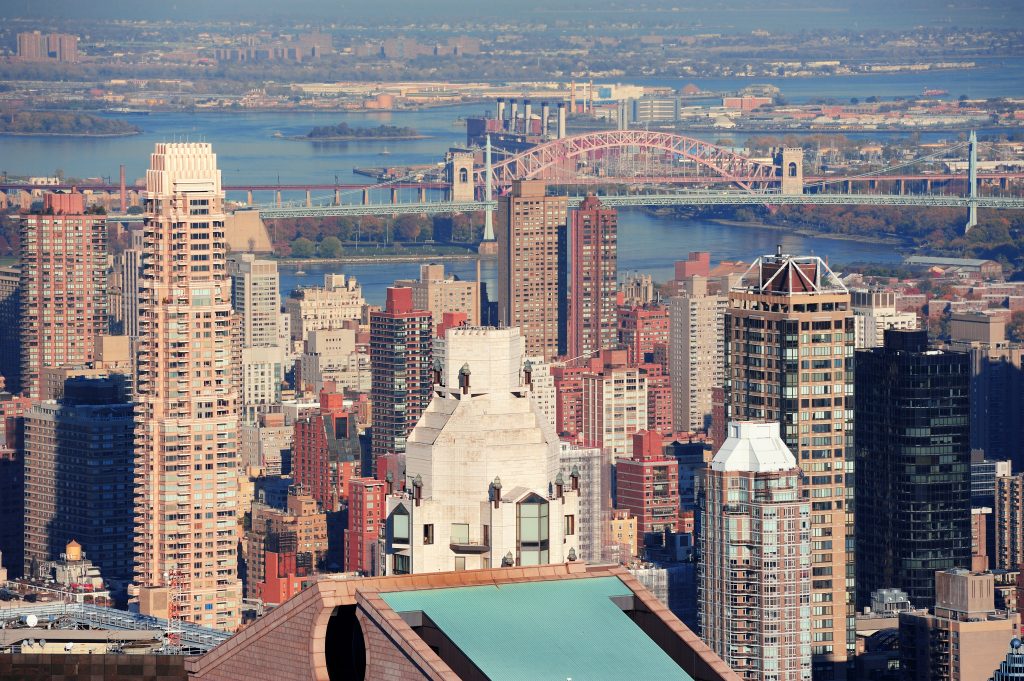
New York City skyscrapers in midtown Manhattan aerial panorama view in the day.
Mamdani’s Policies Raise Questions for Small Businesses
By MOHAMED FARGHALY
mfarghaly@queensledger.com
New York City’s small business owners are watching the early days of Mayor Zohran Mamdani’s administration with a mix of cautious optimism and deep unease as the city’s new leader pushes an ambitious agenda rooted in affordability, worker protections and democratic socialist principles.
Mamdani has proposed sweeping reforms aimed at easing pressure on neighborhood businesses, including cutting city fines and fees for small businesses by 50 percent, increasing funding for support programs by 500 percent and appointing a dedicated “mom and pop Zar” to streamline permits and reduce red tape. His platform also calls for tackling high commercial rents, easing rising Con Edison and water bills and phasing in a $30 minimum wage by 2030, with additional time for smaller employers to adjust.
Supporters say the proposals acknowledge the reality that small businesses face some of the highest operating costs in the country. Critics argue the scope and pace of change could further strain businesses already operating on thin margins.
Mamdani’s relationship with the city’s business community is complex. While his proposals aim to reduce costs and simplify bureaucracy, many owners say steep rents, limited relief and climate-related disruptions continue to threaten their survival.
Much of the interest in Mamdani’s candidacy stemmed from his focus on affordability. His campaign emphasized freezing rents for rent-stabilized apartments and expanding housing development to ease the city’s shortage, moves he argued would stabilize both workers and the small businesses that rely on them.
For some business owners, however, anxiety intensified after Mamdani publicly embraced his political identity.
For small business in New York City the uneasiness that caused stress before Mamdani took office turned into despair after Zohran proclaimed he “… ran as a democratic socialist and will now govern as a democratic socialist.”
“What does that mean?” said one Greenpoint deli owner who witnessed a Mamdani-held rally in that Brooklyn neighborhood a few days after taking office. “I barely make enough money to get by now. How can they run a government owned deli? They can’t survive paying employees $30 and hour.”
The concerns reflect lingering confusion and fear around what democratic socialism would mean in practice for independent businesses. The ideology centers on public ownership or control of major economic drivers such as utilities and transportation, not small retail operations.
“The self proclaimed democratic socialists who have interviewed at The Queens Ledger/BQE media group,” according to Walter Sanchez, its publisher, “… tell us there is a major distinction with utilities and energy companies from the small business owner in the grocery store business. There is also a big distinction from what we know as communism, and that is the government doesn’t own your business and govern your economic viability. That said, there is, without a doubt, a democratic transition, over time, for the economy tied to its core value … a transition from a capitalist to socialist one.”
Mamdani has said empowering everyday workers to influence economic decisions will reduce inequality over time. He has reportedly met with members of the affordable housing development community to speed up construction. But developers say costs remain prohibitive. Recent estimates place the cost of building a single apartment at roughly $800,000, a figure that makes many projects financially unworkable without major subsidies.
Small business owners say similar math problems apply to their operations.
Under former Mayor Michael Bloomberg, who served from 2002 to 2013, the city leaned heavily on public-private partnerships to redevelop major corridors. Large developers bought properties that housed small businesses, giving corporate landlords greater leverage to raise rents and displace longtime tenants.
As New York enters a new era of leadership, employers are also preparing for broader workplace changes. Mamdani’s platform includes expanding worker protections, regulating gig economy platforms, banning noncompete agreements and increasing enforcement by city labor agencies. While he has promised a “fix, don’t fine” approach for small businesses, larger corporations would face tougher scrutiny.
Business groups say the combination of higher wages, rising taxes and expanded enforcement could reshape the city’s economic landscape. At the same time, faster permitting, increased case management and reduced fines could offer meaningful relief if implemented effectively.
For many owners, the question is whether the promised support will arrive quickly enough.