



The Mystery Grave of 30th Drive

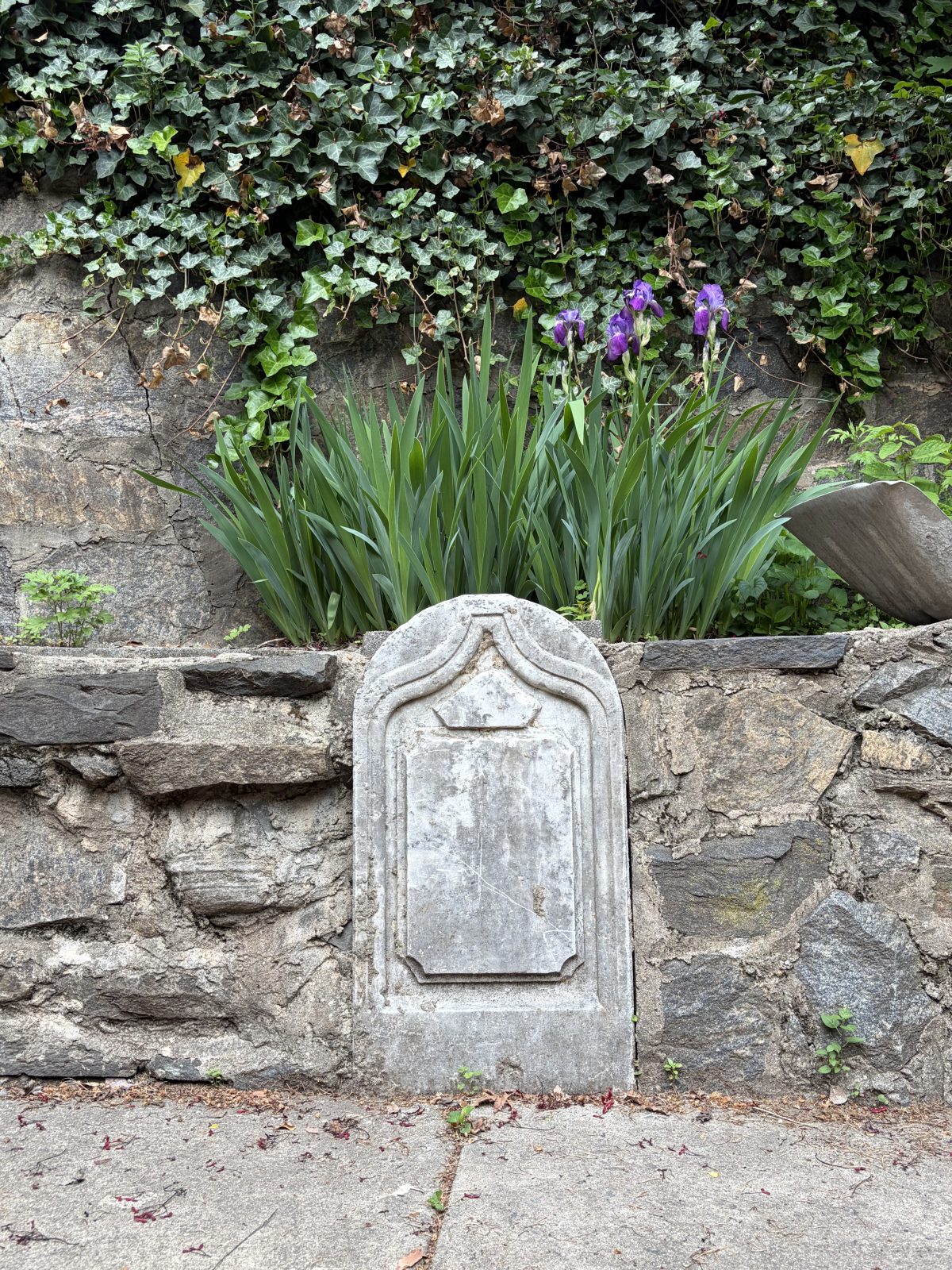
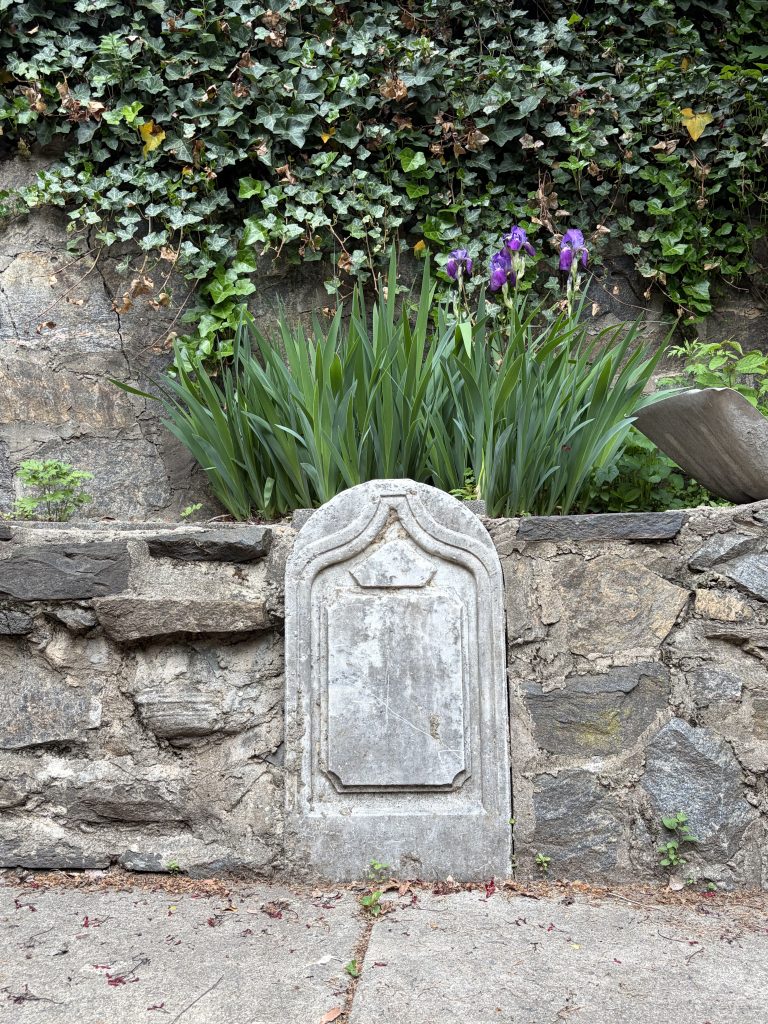
The headstone of William Barry, discovered on Raffaele Mollica’s property. Photos via Alan Arichavala.
The long lost story of Revolutionary War officer William Barry, who was laid to rest in what is now the side yard of Raffaele Mollica’s unassuming Astoria home.
BY ALAN ARICHAVALA
ASTORIA — On 30th Drive by Vernon Boulevard, there stands a row of Victorian-era wood-frame homes. One of them is owned by Raffaele Mollica, a long-time Astoria resident who immigrated with his family from Sicily at just ten years old.
Known to friends and family as Ralph, Mollica built a respected career as a custom wig maker, working for renowned names such as Vidal Sassoon and Elizabeth Arden before opening his own studio on the Upper East Side in 1975. In 1982, Mollica purchased the house where he still lives today.
In the early 1990s, Mollica began a major landscaping project on the property’s side yard, which sat atop a small hill. The project included excavating large amounts of dirt, sand, and stone to create a street-level parking lot along with terraced gardens and steps to the backyard.
Buried several feet beneath the surface, lying flat in the earth, workers uncovered a marble slab etched with decorative carvings.
Recognizing the object’s possible historical significance, Mollica contacted the Greater Astoria Historical Society. Members of the society immediately suspected the slab was a gravestone and soon after contacted gravestone historian Elise Madeleine Ciregna for consultation. Ciregna and her colleagues concluded that the artifact was likely an 18th-century headstone.
Yet one mystery remained: if this was indeed a gravestone, who had it meant to honor? The marble slab bore no name.
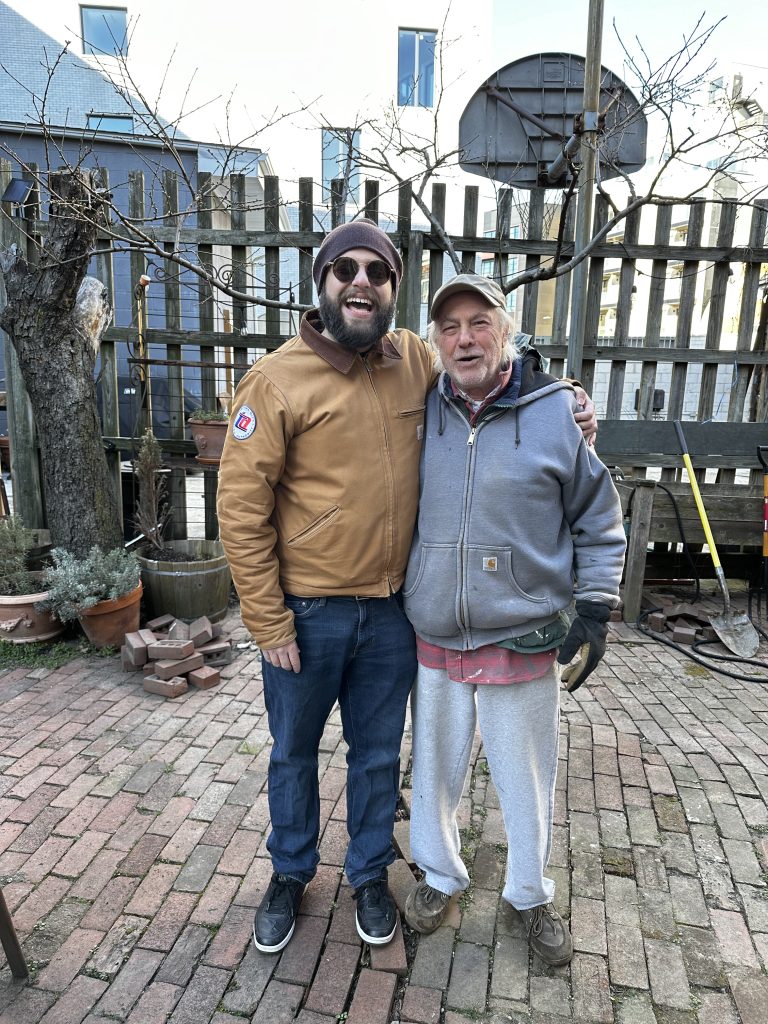
Historian Alan Arichavala (left) and Raffaele Mollica (right).
After much research, a newspaper article from 1781 was uncovered. The article details a funeral service held by British Army officers and presided over by the Reverend Josiah Bloom of St. James Church in Flushing. The funeral was held to honor an officer named William Barry, a fascinating yet troubled figure whose origins remain largely unknown. It is speculated he was a member of a family of minor Irish Protestant gentry, although he faced slim opportunities in Ireland. With little else to look forward to, Barry joined the Prussian Army which was known for its brutal discipline and harsh training methods.
In 1778, Barry resigned from the Prussian Army and joined the British Army, purchasing a commission as a Lieutenant with the King’s Orange Rangers. Barry was sent to fight against the rebelling colonists in what would become the American War of Independence. He saw action in the Portsmouth Expedition of 1779 and the Siege of Charleston in 1780. Later, he would become a Captain in the Volunteers of Ireland.
Despite his active military career, Barry’s service record was marred by his erratic behavior. During the Charleston siege, he reportedly disappeared for stretches of time, only to return at one point without his horse or equipment. His superiors eventually brought him before a court martial, where he was guilty of wanton desertion and other unspecified offences.
Some historians speculate that these incidents were tied to Barry’s fondness of heavy drinking and extravagant socializing—not unusual for 18th-century army officers — but enough to damage his reputation. Facing disciplinary action, Barry resigned from his Captain’s commission.
By 1781, with the Revolutionary War turning against the British, experienced officers and men were in short supply. Barry obtained a Lieutenant’s commission with the Loyal Foresters, under the command of Lieutenant Colonel Connelly, a provincial Loyalist unit tasked with auxiliaryduties in New York and New Jersey.
Despite his checkered career, Barry was known for the bacchanalia-filled parties he hosted for his fellow officers in British-occupied Queens, which saw a number of British and Hessian regiments stationed across its villages and hamlets. In the autumn of 1781, Barry suddenly fell ill and died shortly afterwards. His death came as a shock to his fellow officers, who had enjoyed his companionship and hospitality.
It is said that the officers purchased a marble slab and carved it with decorative designs, though Barry’s name was not etched into the stone. It is instead believed that his name was painted onto the surface, only to fade away with time and exposure.
As the decades passed, Barry’s grave—and his story—slipped into obscurity until it was rediscovered by Mollica. Although no trace of Barry’s remains were ever found on the site, Bob
Singleton of the Greater Astoria Historical Society has speculated that the remains may have been mixed into the soil later transported to Socrates Sculpture Park for landfill use. Today, the weathered and nameless slab survives as one of the few lingering reminders of a long–forgotten officer and the turbulent American Revolution in Queens.