

Search
There are no ads matching your search criteria.

Mayor Mamdani Joins Astoria Mosque for Ramadan Iftar

BY MOHAMED FARGHALY

mfarghaly@queensledger.com

The scent of home-cooked food drifted through the halls of the Masjid Islamic Unity & Cultural Center as families gathered shoulder to shoulder, waiting for sunset to break their Ramadan fast. Children leaned over railings to catch a glimpse of the evening’s guest while elders greeted one another warmly. On this night, the mosque at 31-33 12th St. welcomed a familiar visitor: Mayor Zohran Mamdani, returning to the Astoria neighborhood he once represented as a state assemblyman.

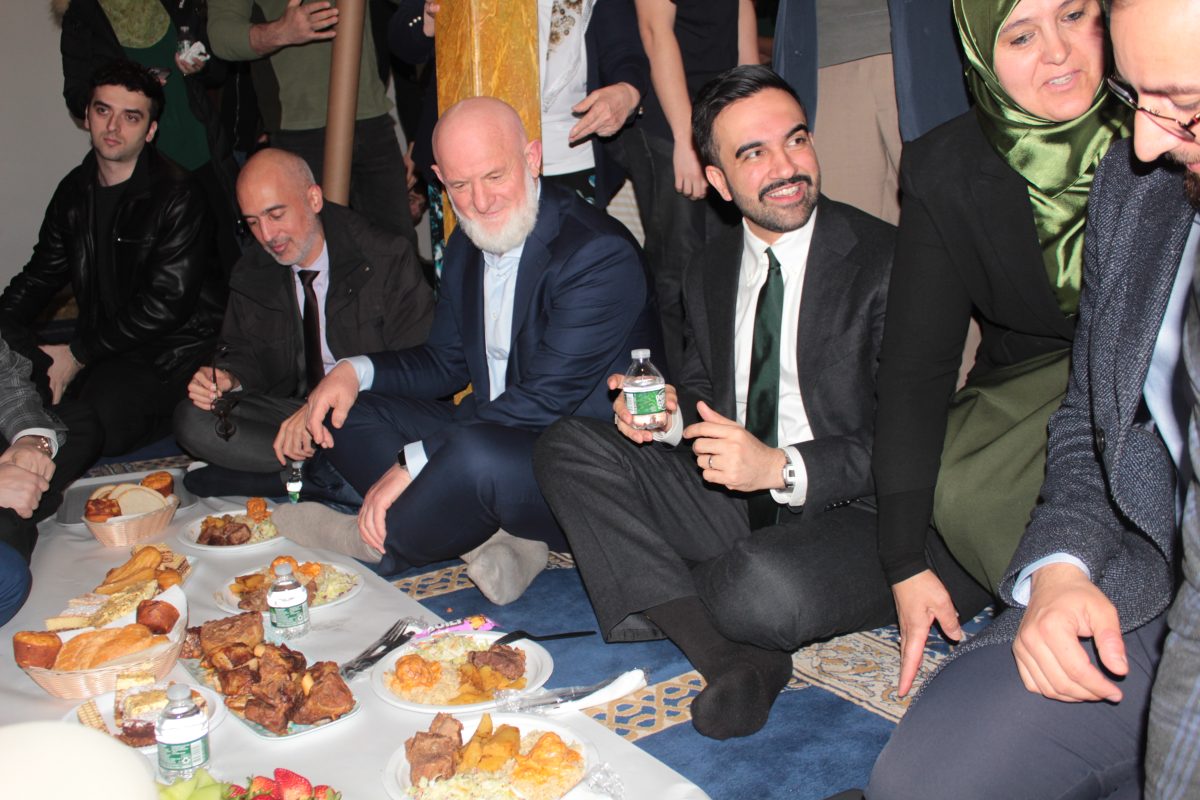
Mamdani, the city’s first Muslim mayor, joined dozens of Bosnian New Yorkers on March 17 for iftar, the nightly meal that ends the daily fast during the holy month of Ramadan. The visit felt less like a formal appearance and more like a reunion. Children gathered around him excitedly while longtime mosque members, affectionately called “uncles and aunties,” welcomed him with handshakes and embraces before the community prepared for maghrib prayer.

The evening opened with remarks from the mosque’s main imam, Kemal Bektesevic, who greeted Mamdani and spoke about the community’s hopes for the city and their connection to the mayor.

“Brother is someone who is close to the heart, someone you care about honestly,” Bektesevic said. “Not just because you are a brother, but because we truly hope you will make a change in this city and that we will feel the warmth of that change.”

Reflecting on the political journey that brought the mayor to their mosque, the imam shared a personal story about voting for the first time after encouragement from younger members of the community.

“I was raised in a way where I never went to a polling station,” Bektesevic said. “Then the youngsters in my community came to me and said, ‘Let’s do something.’ A friend and member of our community told me about you, and I said, ‘Okay, let’s try.’”

He said Mamdani’s campaign gave many in the community a sense of optimism.

“I’m not saying we have done a lot,” Bektesevic said. “But you gave us a very big hope that, Inshallah, we will see you succeed. That’s why I say: keep going straight and make us proud, and make proud all those who worked hard for you.”

Moments later, Mamdani stepped forward to address the congregation, greeting the crowd with a familiar Ramadan blessing.

“Ramadan Kareem, Ramadan Mubarak,” he said. “It is such a joy and a pleasure to be here, not just as your mayor, but as your brother.”
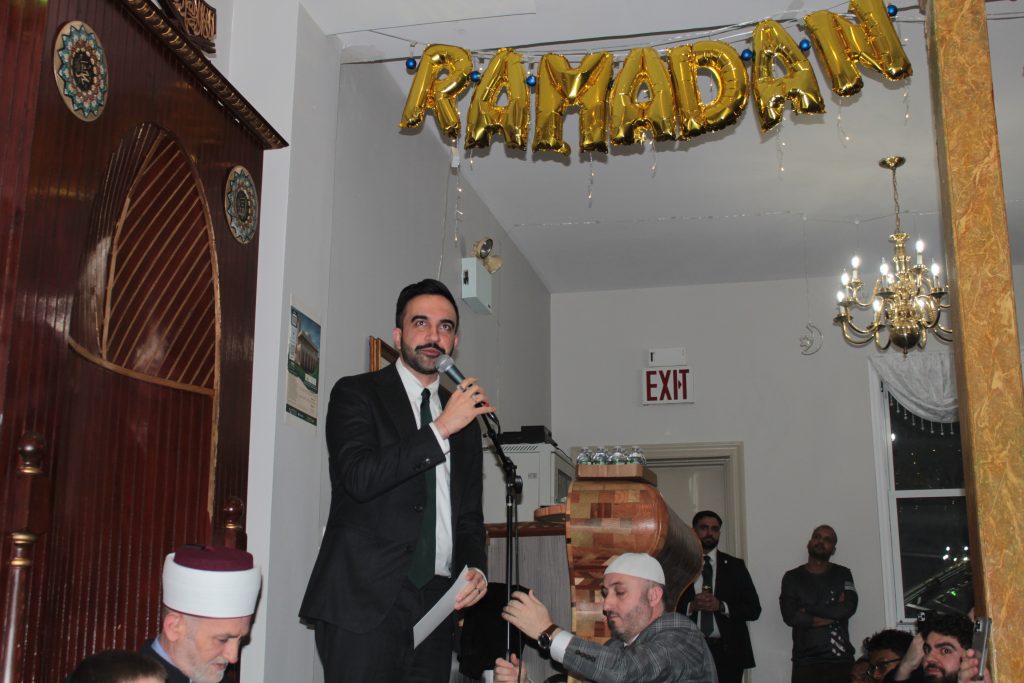
Mayor Mamdani visited the Masjid Islamic Unity and Cultural Center in Astoria to break his Ramadan fast last week. Photos by Mohamed Farghaly.

For Mamdani, the visit carried personal significance. Before becoming mayor, he represented Astoria and Long Island City in the state Assembly, and he recalled working with members of the mosque years earlier on community efforts to help neighbors in need.

“This is a return home for me,” Mamdani said. “Before I was your mayor, I was an assembly member for Astoria and Long Island City, and as I was just sitting here next to brother Ismail, he was showing me text messages that I sent him in 2019 and 2020 where I was asking him if he would sponsor some iftars that we would give to those in need in the neighborhood.”

The mayor thanked mosque leaders and the young people who recited prayers earlier in the evening, calling them reminders of the community’s future.

“Our youngsters who are here with their beautiful recitations remind us that the future is always what we are striving for,” Mamdani said.

He also reflected on the history many Bosnian families carry with them in New York, referencing those who fled war and genocide in the Balkans before rebuilding their lives in the city.

“Many in this community came here after a genocide, came here out of necessity to find a place of safety,” he said. “Hardship brought many Bosnians to New York City, yet I’m grateful for the ease that you have delivered to our city, in shaping our neighborhoods and shaping the very places that so many know as their home today.”

As the call to prayer approached, the room grew quieter. Dates and water were passed along tables as families prepared to break their fast together. Mamdani spoke about the meaning of Ramadan beyond abstaining from food and drink.

“Many people think of Ramadan solely as a time characterized by fasting from sunup to sundown,” he said. “But I look forward to Ramadan because of what it means in terms of reflection, recommitment and giving meaning to the things that we lose sight of.”

The mayor also thanked the congregation for participating in civic life, saying their engagement helped reshape the city’s political landscape.

“I would not stand before you as the mayor of this city if it wasn’t for every single New Yorker who told themselves that this would be the time they would participate,” Mamdani said. “You saw yourself in the city that is also your own. You saw yourself in its politics. You saw yourself in its future.”

As the fast was finally broken and the community moved for the meal, the evening blended faith, food and conversation. Plates filled with traditional dishes, children darted around the room and elders shared stories late into the night.

For Mamdani, the gathering served as both a celebration of Ramadan and a reminder of the neighborhood that helped shape his political journey.
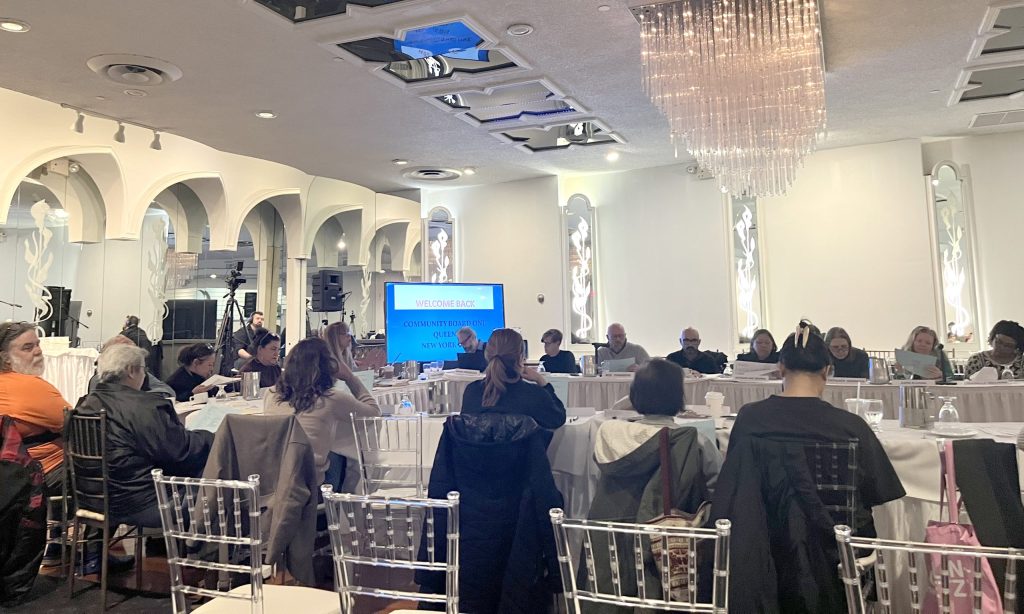
Safe Streets Scrap at CB1

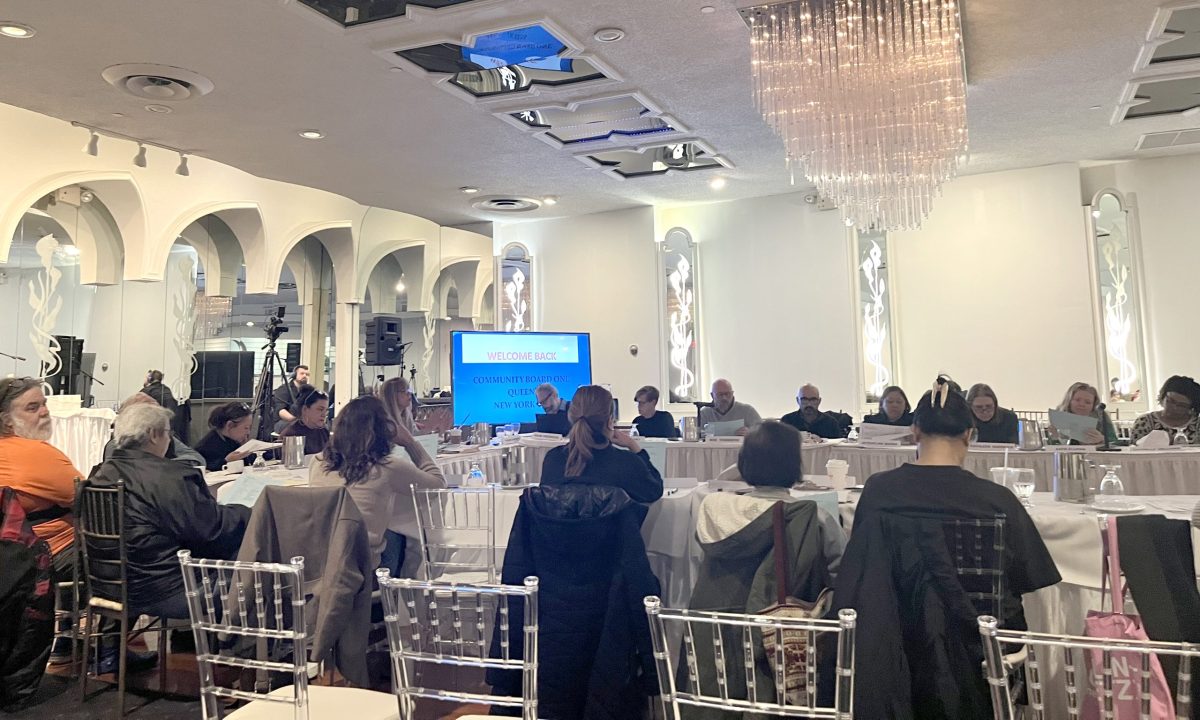
At Queens Community Board 1, which meets monthly at Astoria World Manor, street safety is a hot-button topic.

BY COLE SINANIAN

cole@queensledger.com

ASTORIA — “My name is Gloria Maloney and I just wanted to know if anybody wanted to buy my car,” began the 78-year-old during the public testimony portion of last week’s  Community Board 1 meeting at Astoria World Manor. “It’s a 2016 Jeep Cherokee, very low mileage.”

Maloney’s sarcasm drew chuckles at first, but her tone shifted as the testimony went on; she was here to draw battle lines over an ongoing debate with no end in sight.

“Even though I haven’t ridden a bike in over 40 years, I think I’m going to have to sell my car and get a bike so that I can go slower than most of the mopeds, scooters and bicyclists in the neighborhood,” Maloney continued. “Apparently, we’re now going to be a car-less city, so I have to get with the program. You know, at 78 years old.”

The context, of course — as those who’ve been paying attention will know — is the ongoing debate over how to make Astoria’s crowded and congested streets safer. The 31st Street protected bike lane, whose construction 11th District Judge Cheree Buggs halted in December after several nearby businesses sued, has spurred passionate discussion in Community Board 1.

Legislation known as Sammy’s Law, meanwhile, was passed in 2024 and reduced speed limits from 25mph to 20mph in designated streets, though the city has been slow to implement the law.

Research has indicated that risk of pedestrian fatalities drops significantly from 25mph to 20mph.

“I’m really not happy with the bike lanes. I’m not happy with the traffic mileage going down lower than 25, it’s already slow enough as it is,” Maloney said, raising her voice slightly.

“You have to look when you cross the street, take your head out of your phone and look,” she said. “They come from some kind of city, from a town somewhere else where they don’t even have traffic lights. We have traffic lights for a reason.”

But little did Maloney know, behind her at the podium Community Board 2’s First Vice Chair  Rosamond Gianutsos waited at the ready with a blistering rebuttal:

“I have to say, with respect,” Gianutsos said, gesturing to Maloney, who had returned to her seat. “I’m 80, but my bike is right outside. So yes, join the program.”

Gianutsos is a doctor and member of the national advocacy group, Families for Safe Streets. She explained that through her work doing home visits to people who’ve suffered traffic violence, she spent years talking to families who’ve lost loved ones to car collisions, an experience that has fundamentally altered her view of the bikes-vs-cars debate.

She had come to CB1 to testify in support of lowering speed limits in the area, which she argued would be beneficial to not just bikers and pedestrians, but to drivers too.

“Furthermore, it’s not just bicyclists and pedestrians that are hurt,” Gianutsos said. “It’s also drivers. If you look at the data, there are lots of people who are killed and injured as passengers or drivers of cars.”

She concluded: “So anything we can do to prevent the travesty of traffic violence and pain to families, please do support it.”

Sammy’s Law was named for Sammy Cohen Eckstein, a 12-year-old Brooklyn boy who was killed in 2013 after being struck by a distracted driver.

QED Astoria Retains Identity One Year Into New Ownership

Photos by Maryam Rahaman.

BY  MARYAM RAHAMAN

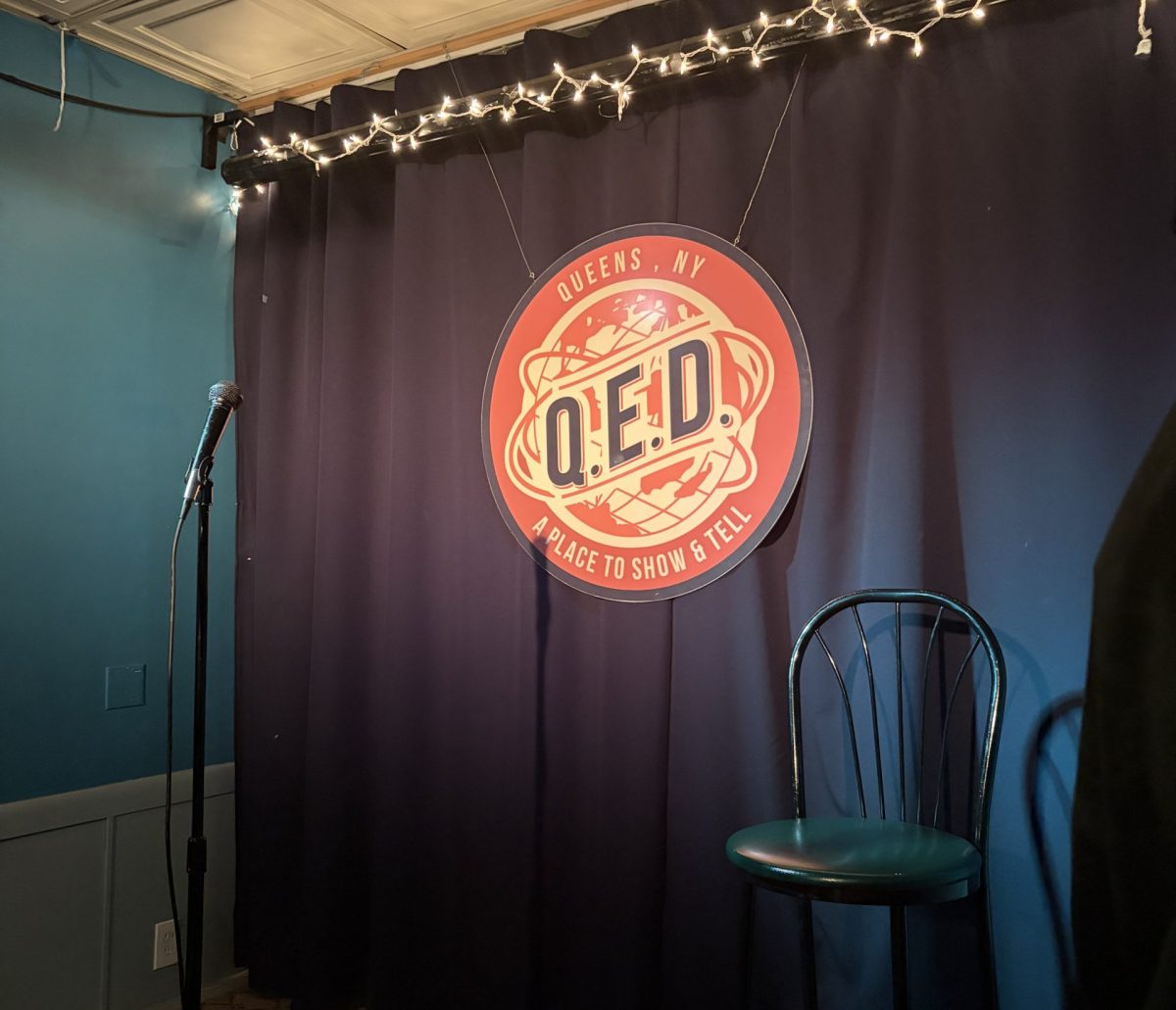
ASTORIA — Free municipal condoms, the Real Housewives, and conservative Christian radio all came up during last Thursday’s Paid Protest show at QED Astoria, where a sold-out crowd laughed uproariously as five comics and their host Anders Lee married political themes with comedy.

QED Astoria, founded in 2014 by comedic storyteller Kambri Crews, boasts a variety of programming, from free toddler storytimes to adult spelling bees to comedy shows in languages reflecting the full diversity of Queens. For the past few months, the venue has been the home of Paid Protest, a monthly Democratic Socialists of America (DSA) comedy show fundraiser.

Proceeds from last week’s show went to the organization’s Immigration Justice Working Group. Signatures were also collected to petition for DSA candidates Aber Kawas and Diana Moreno. Performers included Rufat Agayev, Gastor Almonte, Aidan Kelly, Taylor Petty, and Srilatha Rajamani.

Though QED is not strictly a comedy club, young New York City comedians have long flocked to it as a testing ground for performing. In November 2024, Crews announced she would close the venue unless a buyer stepped in. It was announced two months later that comedian Hannah Lieberman, a former QED performer, would take over.

Lieberman moved to the city after college to attend acting school, graduating right into the pandemic. In the midst of working odd jobs and auditioning for commercials, she leaned into the “inkling” that she wanted to do stand-up. After a bringer night (when comedians are required to bring audience members) that worked “better than it had any right to go,” Lieberman realized she wanted to perform and produce shows. When she moved to Astoria, QED and its community were a natural fit.

“It’s the first club where I headlined. It’s the first club where I produced a show,” Lieberman said. “This club meant so much to me already, and it was already my home base. It was kind of like kismet.”

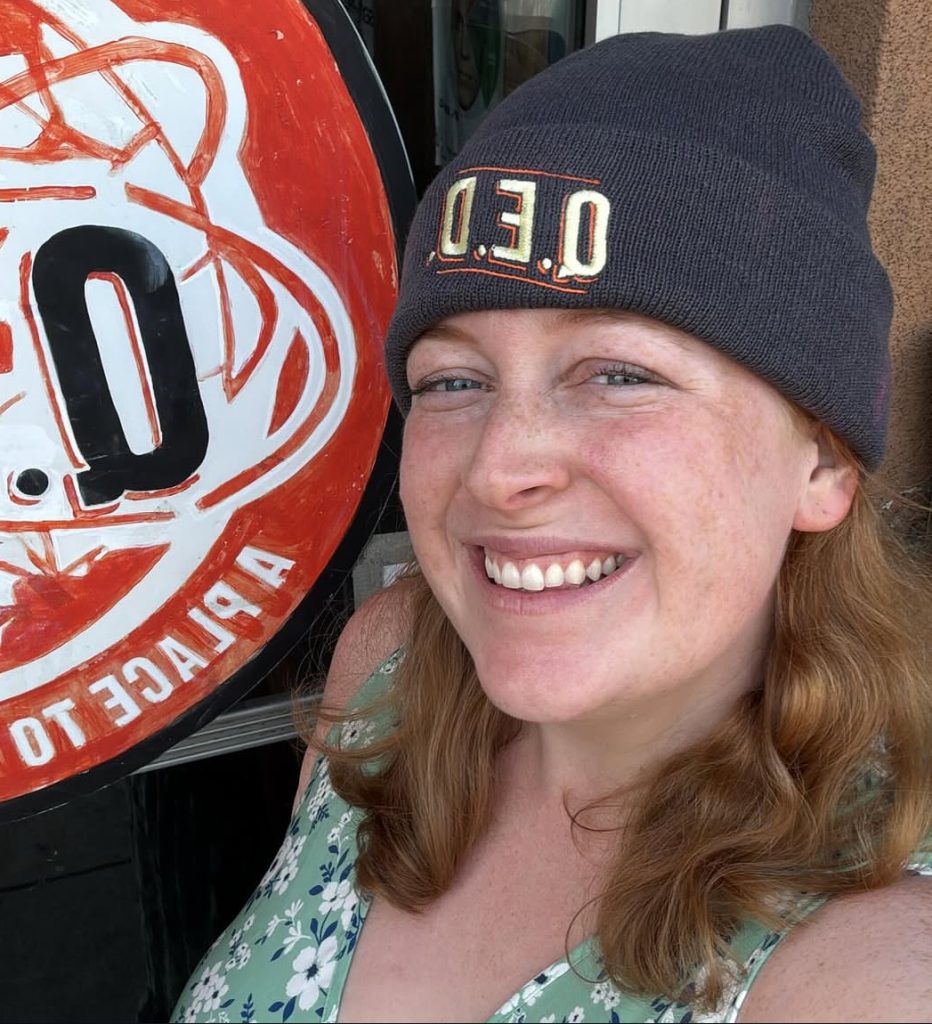
Comedian Hannah Lieberman is the new owner of QED Astoria.

This rendition of Paid Protest featured several comedians who had been performing at QED for years, including Agayev, Almonte, and Kelly. Almonte says that while other comedy spaces might struggle long-term because they focus on big names, QED has invested in giving young artists stage time. One of his favorite memories was getting to have his son see what he does, taking pictures and holding the microphone after a show.

“As much as I love other stand-up spaces, I probably wouldn’t have felt as comfortable bringing my seven year-old into those environments.”

It’s been about a year since Lieberman officially took over last March after shadowing Crews. As a former nanny, she’s added a lot of after school and children’s programming, in addition to changes that reflect the 25 year age gap between her and Crews—such as a Disney Channel original movie night in the form of a drinking game.

Marrying comedy and politics is not a new ownership change. Though Paid Protest has become part of regular programming under Lieberman, Crews previously held fundraisers for Zohran Mamdani and Alexandria Ocasio-Cortez at QED. To Lieberman, being honest about the venue’s political leaning is important.

“This is very much a progressive place. I think that’s reflected in our comedy too,” she said. “If you averaged open mics across the country, ours are the most welcoming to women.” For her, political comedy is to not only “shed a light on injustice,” but to keep herself “sane.”

“What eventually will happen is they’re going to try and shut down spaces like QED where people criticize the government,” Kelly said. “It’s insanely, insanely important.”

QED’s upcoming events can be viewed on Instagram @qedastoria or on their website qedastoria.com.

Fill the Form for Events, Advertisement or Business Listing