



LIC Chinatown Might Be NYC’s Ritziest

Unlike other Chinatowns, LIC’s is young, wealthy and hi-tech.
By COLE SINANIAN | news@queensledger.com
I’m slurping a steaming green hotpot of sauerkraut and crispy snakefish as a frigid wind ricochets off the jumble of glistening towers high above. A young man in Adidas joggers with an iPad slung across his back just delivered my Tsingtao in a small glass cup. It was BellaBot, however — a waist-high robot with cat ears — that served my soup and rice.
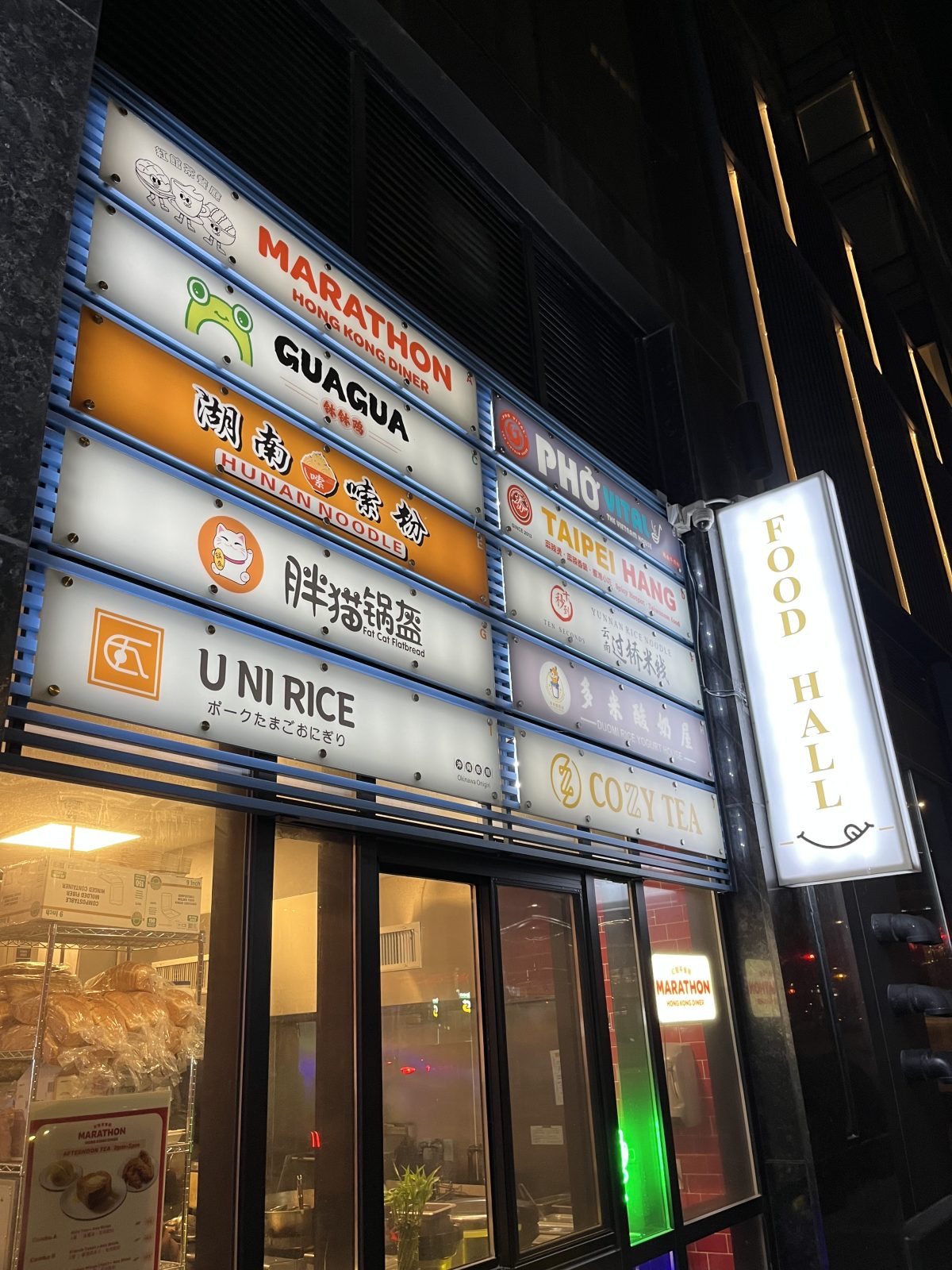
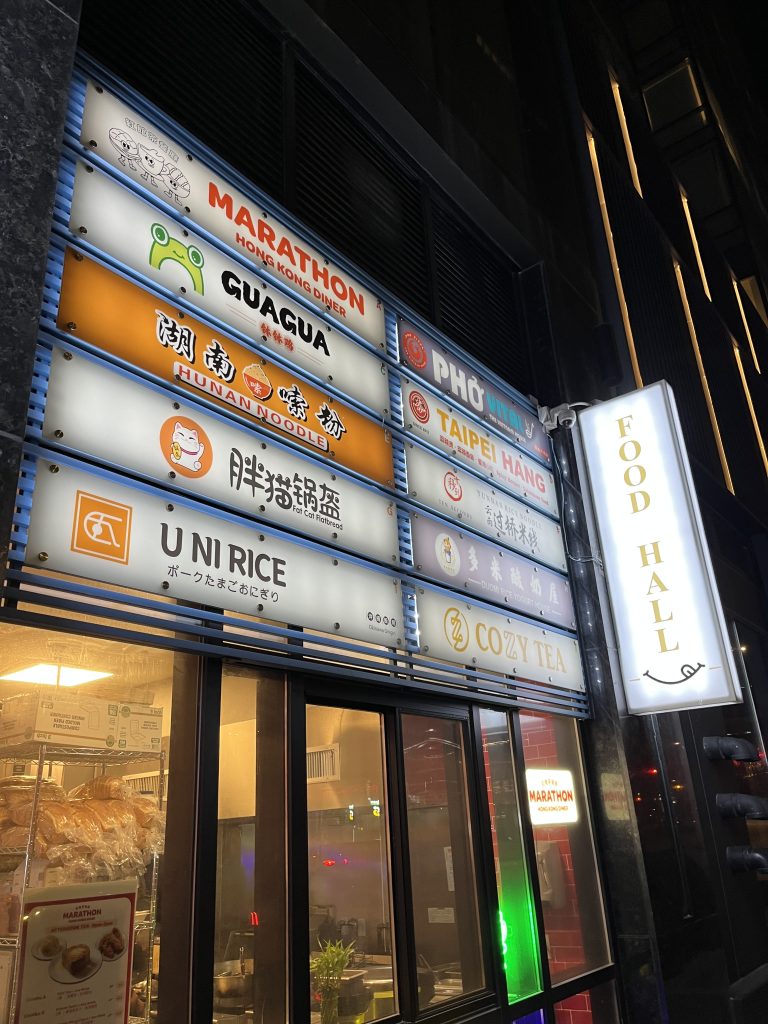
Where am I? Nai Brother in Long Island City of course! Located on 42nd Street just past Jackson Avenue, this hotpot joint sits at the base of a residential tower, as do most eateries in this part of town. Next door is the LIC Food Hall where one can buy sesame seed-crusted flatbreads called Guoki and Hong Kong pineapple buns. Further up the street is NaiSnow, a global chain serving egg tarts and “chewable teas,” across from which is the swanky, neon and velvet-draped fine-dining restaurant, Red Sorghum serving elevated Sichuan and Hunanese specialties. Meanwhile, authentic hotpot spots like the Chengdu-based chain Da Long Yi as well as Taiwanese lunch counters like Yumpling and Gulp abound in the surrounding streetscape.
The intersection of Jackson Avenue and 42nd Street is the epicenter of an emerging global food scene that several local critics have hailed as New York’s newest Chinatown. Writing in Gothamist, Robert Sietsema counted 30 Chinese eateries in LIC. “How are their menus different from those of Chinese restaurants you may know?” he wrote. “Well, they tend to concentrate on meal-size soups, wheat and rice noodles and barbecued skewers.”
Some redditors on r/FoodNYC, however, were more critical:
“The LIC Chinatown caters to the nepo babies living in the LIC condo towers, which were purchased by their parents as a means to park their family money outside of the Mainland,” wrote one.
But according to Flushing native and veteran food writer Caroline Shin, the truth is a bit more complicated. As LIC undergoes one of the city’s most rapid and total urban transformations — with new residential skyscrapers sprouting like wildflowers and the OneLIC rezoning promising to add some 14,700 new housing units — its demographic makeup appears to be shifting accordingly. Unlike the Chinatowns in Sunset Park, Flushing, and Lower Manhattan, LIC Chinatown is young, wealthy, and chronically online.
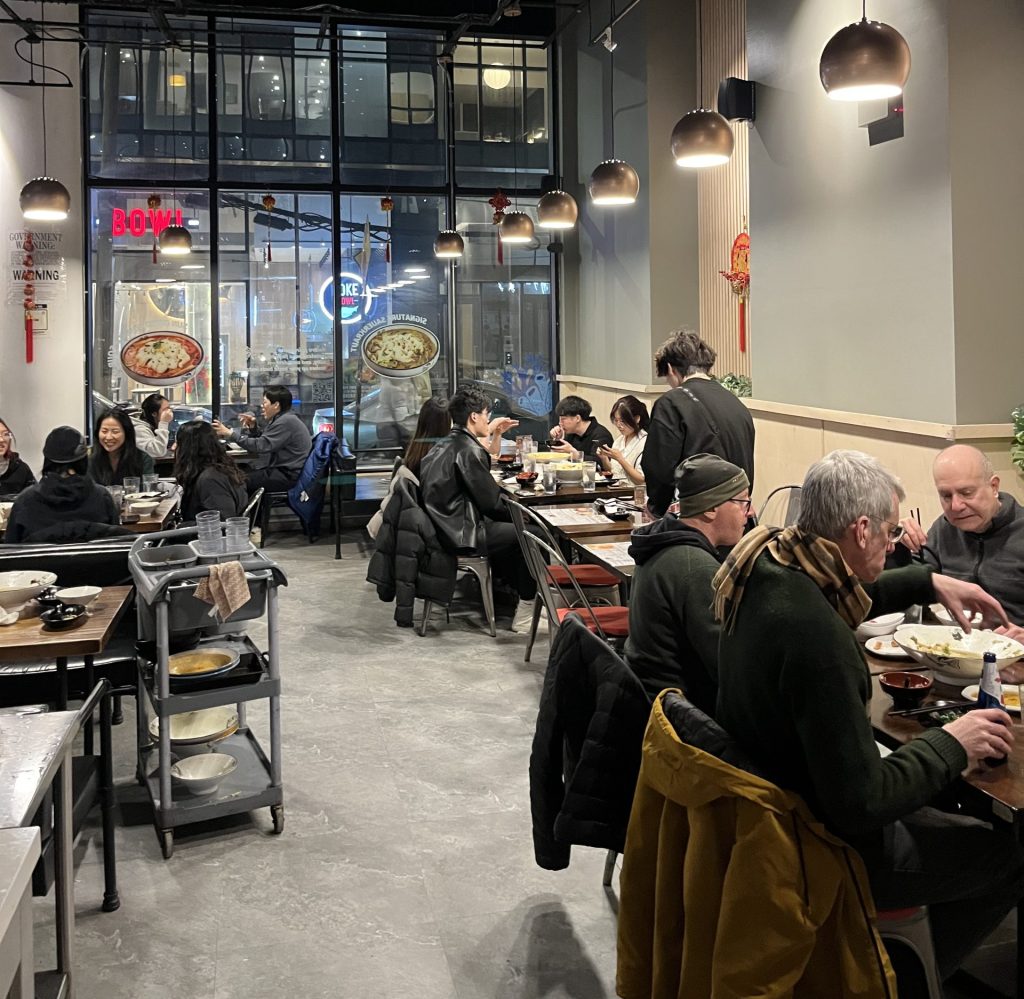
The scene at Nai Brother.
Industrial to Futuristic
Having spent her teenage years in the 90s commuting from her family’s home in Flushing to her high school on the Upper East Side, Shin watched every day as steam poured out unmarked industrial buildings in the graffiti-clad Long Island City that passed by out the 7 Train window. Later, her brother lived in Long Island City, where she’s spent lots of time eating since.
While Manhattan Chinatown, can trace its roots to the late 1800s, when working class migrants arrived in waves on a desperate search for work, many of the Chinese immigrants to LIC in the 2020s are likely here more voluntarily, given the neighborhood’s high concentration of luxury real estate, Shin says. Many of her observations are anecdotal, as useful demographic studies are still hard to come by. But she suspects there’s a correlation between China’s recent economic growth and the sorts of Chinese people moving to LIC today.
“I believe it’s mostly wealthy, upper middle class people, reflecting the economic development of China and the formation and expansion of China’s middle class,” Shin said. “I also hear anecdotally that they’re buying apartments for their kids.”
The cuisine of the Sichuan province and all of its accompanying spice is abundant in LIC, though this may have less to do with the origin of its immigrant community, Shin says, and more to do with the cuisine’s widespread popularity both within China and around the world. Think hotpots, bean paste, chili peppers and the numbing, citrusy flavor of Sichuan peppercorns.
“I think it actually reflects what’s trending in China,” Shin said. “When you have new immigrants, they come with their palates, or their nostalgia for something, and then a restaurant would come and I think they would try to cater to that demand. Sichuan food is huge in China, but at the same time, Sichuan food is also huge in New York.”
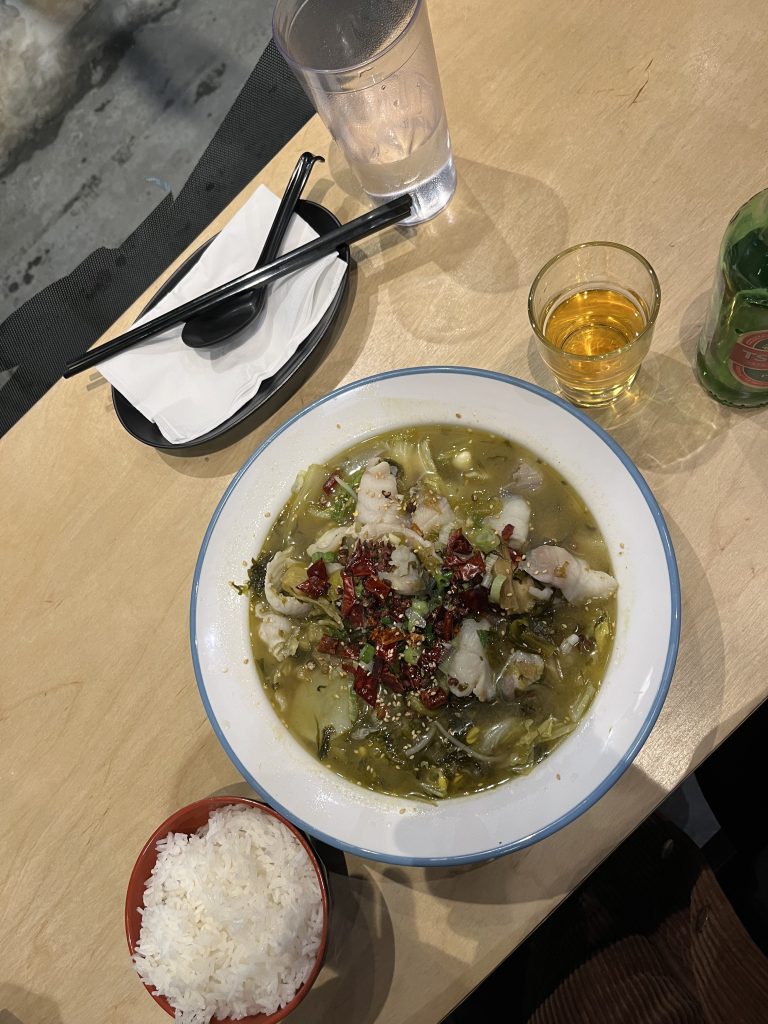
The signature sauerkraut fish soup at Nai Brother in LIC.
Nai Brother
At Nai Brother, the signature sauerkraut fish is a good place to start, although everything is highly customizable. Add beef slices, lotus root, kimchi, or tofu for a bit of heft— though this may not be necessary as the “small” portion is more than enough for one.
“I’m obsessed with the Sichuan peppercorns,” Shin said. “But don’t eat them— it’s more just for the explosive flavoring that they give.”
The broth is pungent and layered, carrying bits of bean sprout, Napa cabbage, lotus root, dried red chili peppers and Sichuan peppercorns. Every kind of texture can be found here. If you accidentally get a peppercorn caught in your throat, don’t panic. Take a bite of something mild like the snakefish or lotus root, both of which act as palate cleansers amongst the spice.
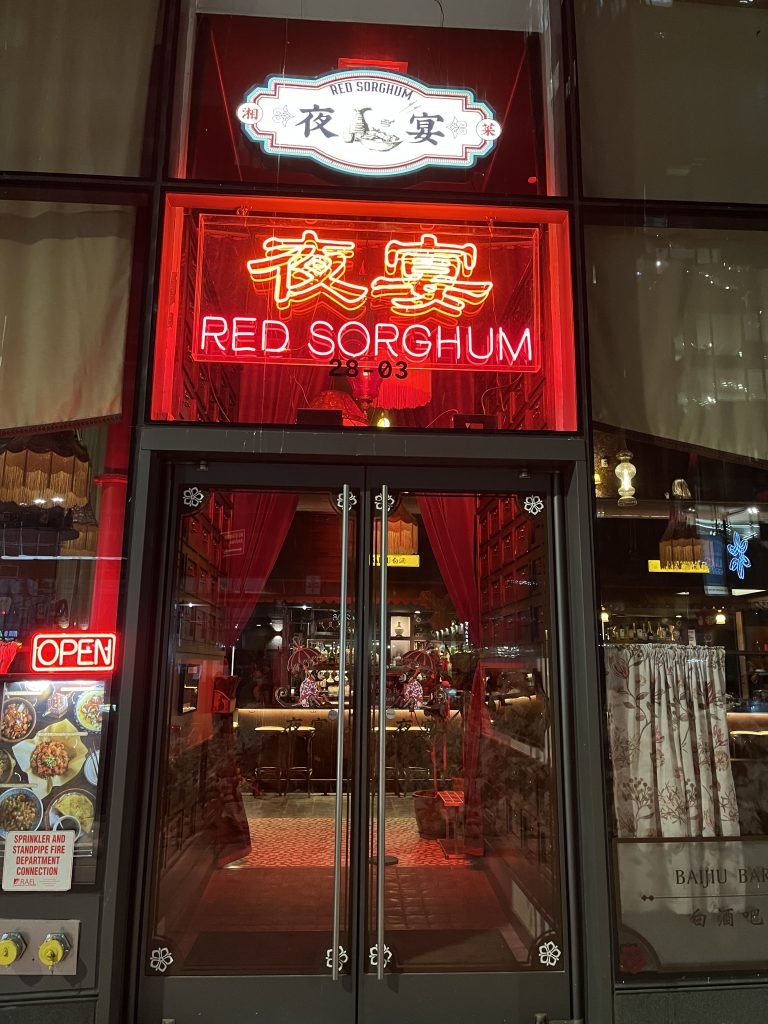
Red Sorghum, located at the corner of Jackson Ave and 42nd St, offers elevated Sichuan and Hunanese specialties in a luxe dining room.
Red Sorghum
For something a bit more special, head to the base of the residential tower at the corner of 42nd Street and Jackson Avenue. At Red Sorghum, whose name refers to the key ingredient in Chinese Baijiu liquor, the spicy, stir-fried flavors of Hunan run deep. You’ll also find mainland specialties like century egg — a salty, dark-colored fermented egg — chili-oil bathed Sichuan wontons and a full Peking duck, as well as more adventurous offerings like crispy pig ears, beef aorta, pumpkin mochi, truffle soup dumplings, a goji berry-infused “longevity chicken soup,” and an $88 “Imperial Sea Cucumber.” Shin, however, recommends the “Miss Lou’s Famous Beef Stew,” made with translucent Konjac noodles and slabs of fatty beef held together in a rich and sour golden broth. Prices here are steep, Shin notes, but — like many of LIC’s new restaurants — it’s not the sort of place you’d go for a casual lunch.
“It’s one of my go-to celebratory special places,” she said. “It’s just so lush, it’s so beautiful.”